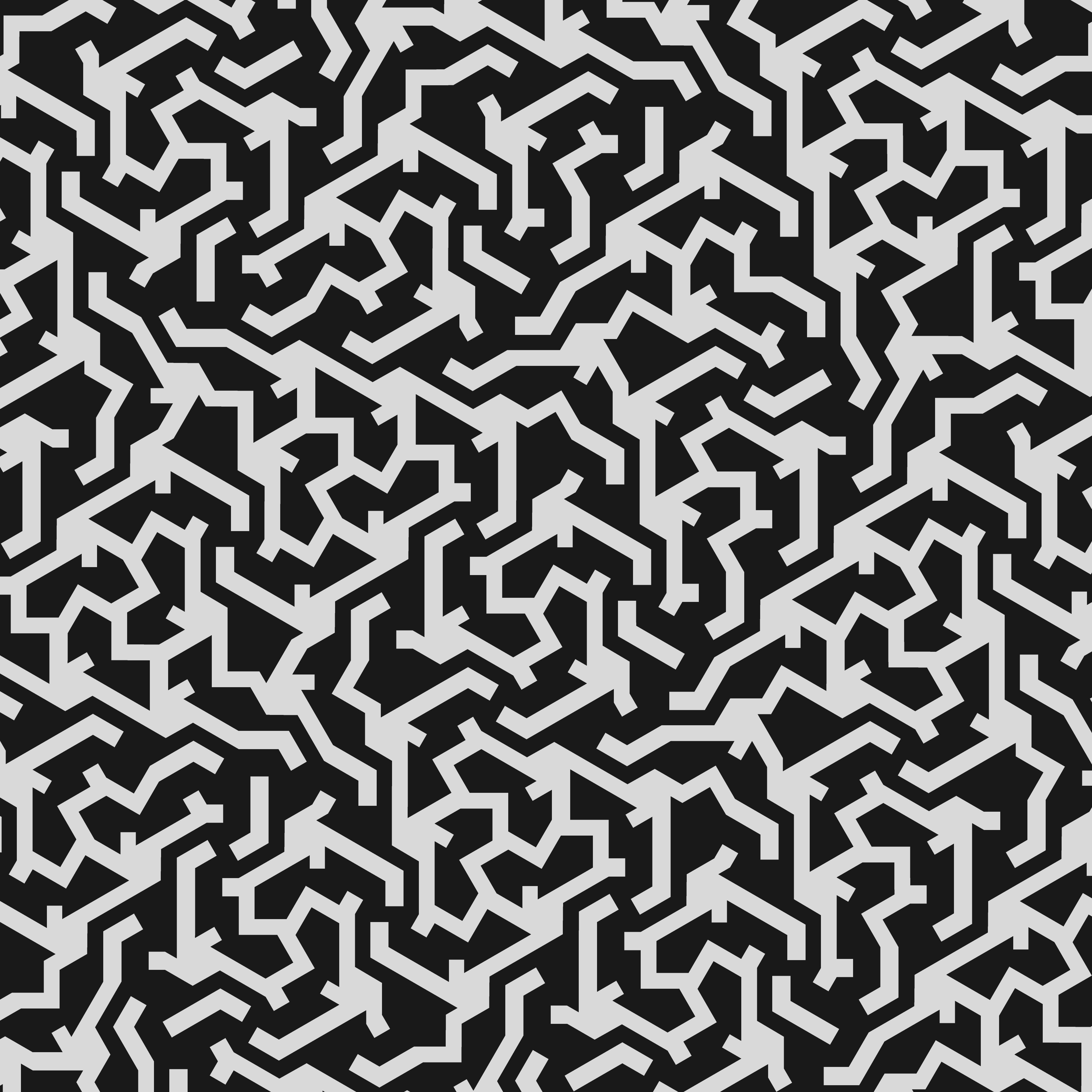
While researching the recently solved “Einstein Problem,” I stumbled upon talented individuals who were using this new discovery to build mathematical art. These people equipped me with the tools and inspiration to create some works of my own. In creating this art, I found a new connection to M.C. Escher, a master of tessellation art.
The Einstein Problem
The einstein problem asks if there exists a shape that tiles (covers without gaps or overlaps) a plane aperiodically (without a repeating motif). Just recently a small research team discovered that tile, solving the einstein problem. They discovered not just one tile but an entire family of tiles. They named this family of tiles ‘Specters’.
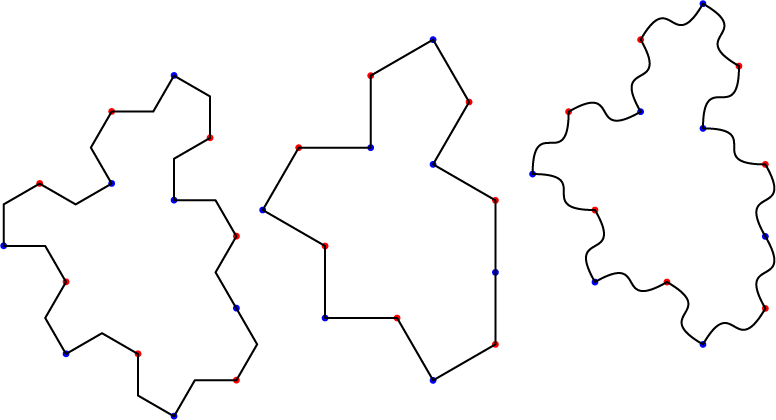
I was disappointed to learn that the einstein problem has no relation to Albert Einstein. In this case we’re referring to the literal German translation, meaning “one stone”.
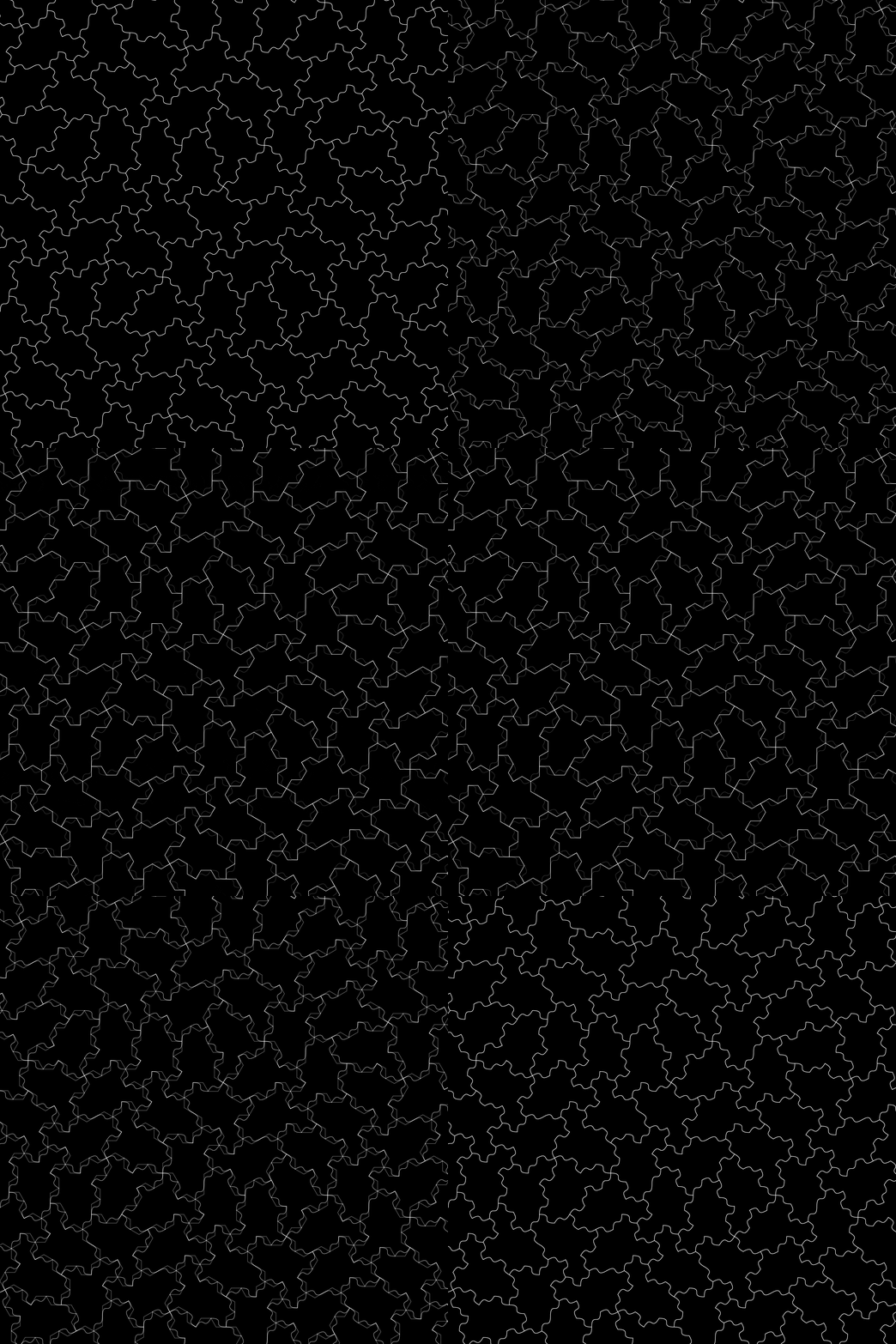
A tessellation of Specters. The animation fades between differently stylized edges.
Getting Hands On
The initial discovery was made by David Smith, a retired print technician and self-identified “shape enthusiast.” In his pragmatic methodology he used both software and cardboard cutouts to experiment with tessellation. In turn, I wanted to do some hands-on experimentation too.
I went online to find a tile file for 3D printing, and found more than I expected. People have been decorating the tiles so that when they’re tessellated a design takes form. I downloaded a few of these designs, 3D printed them and then made these mosaics.
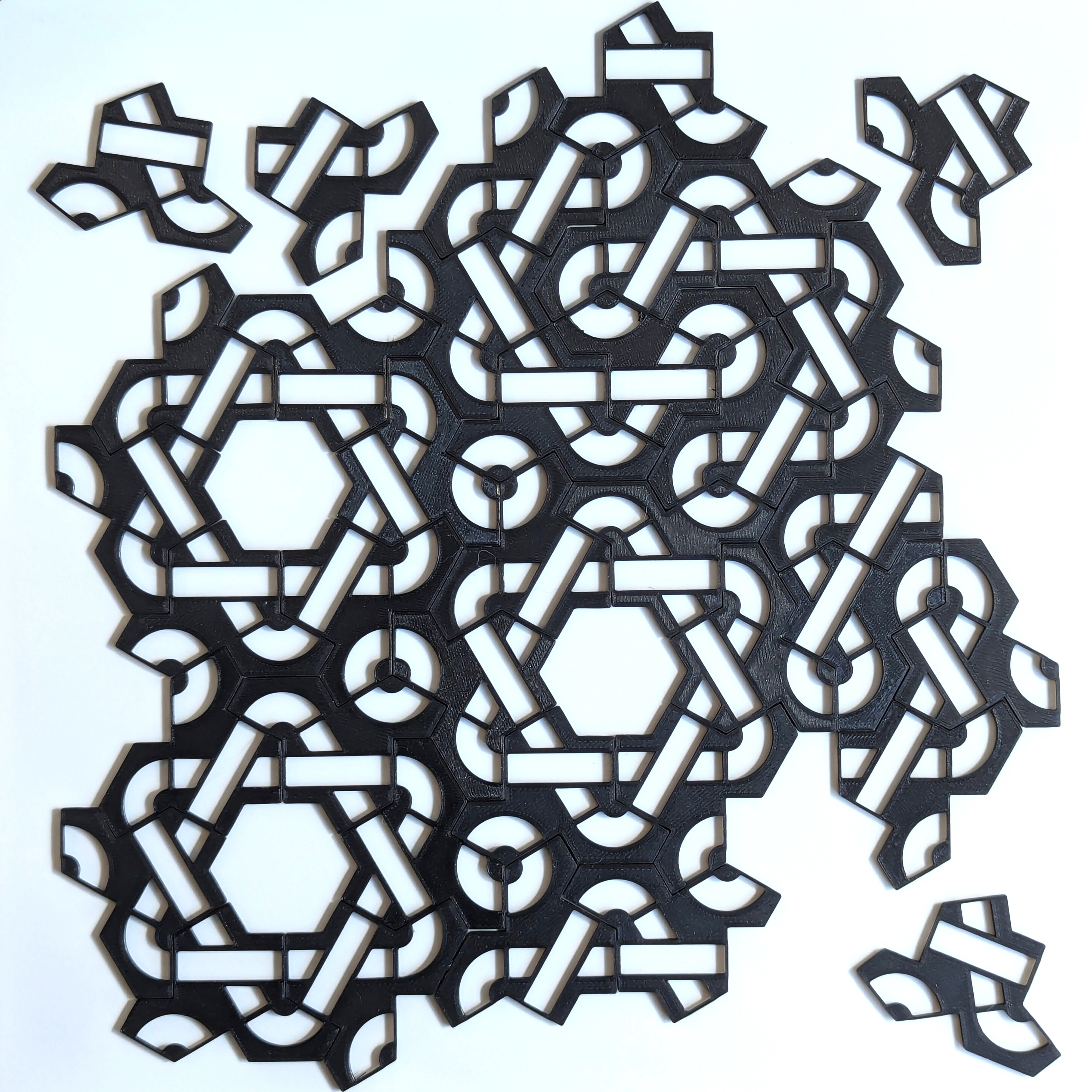
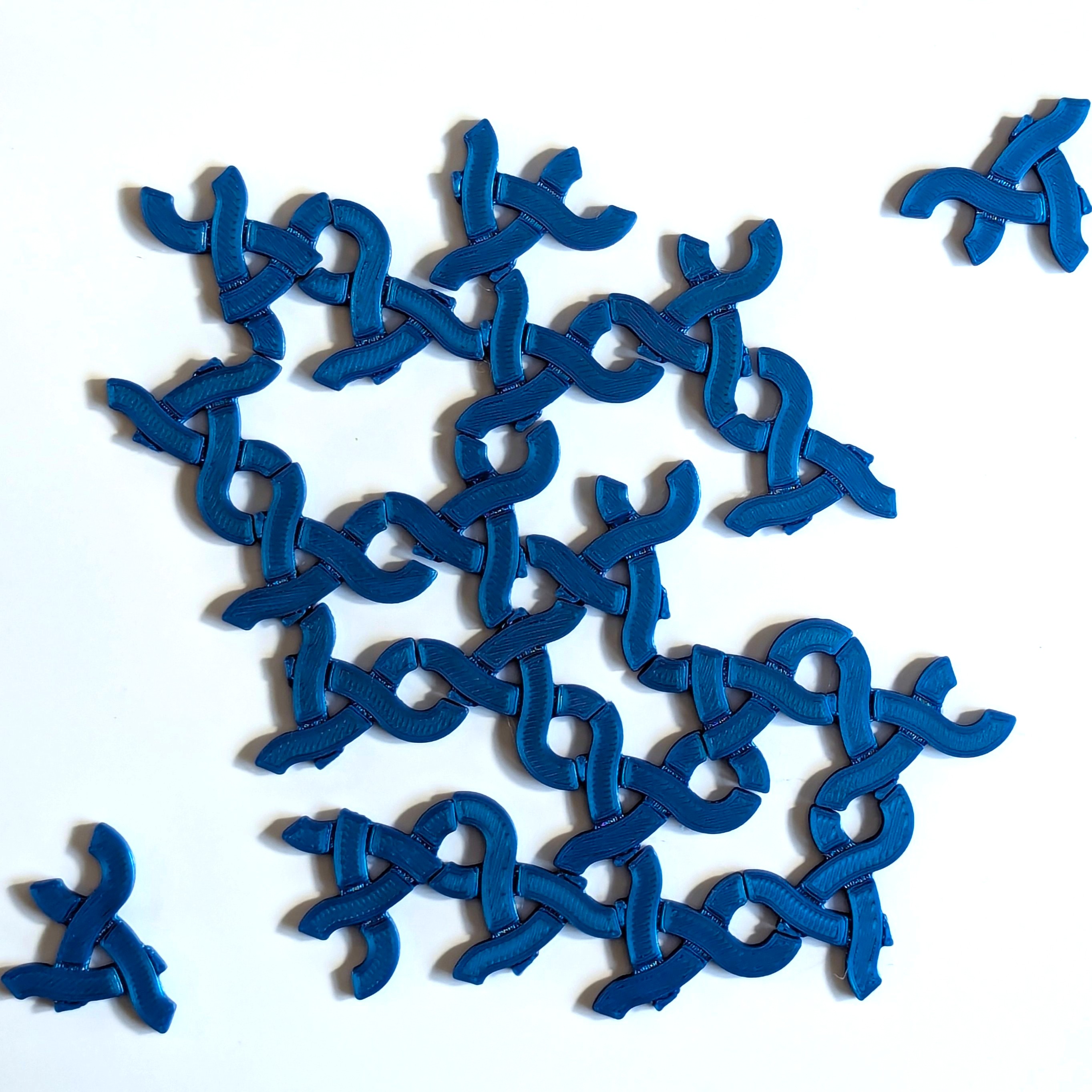
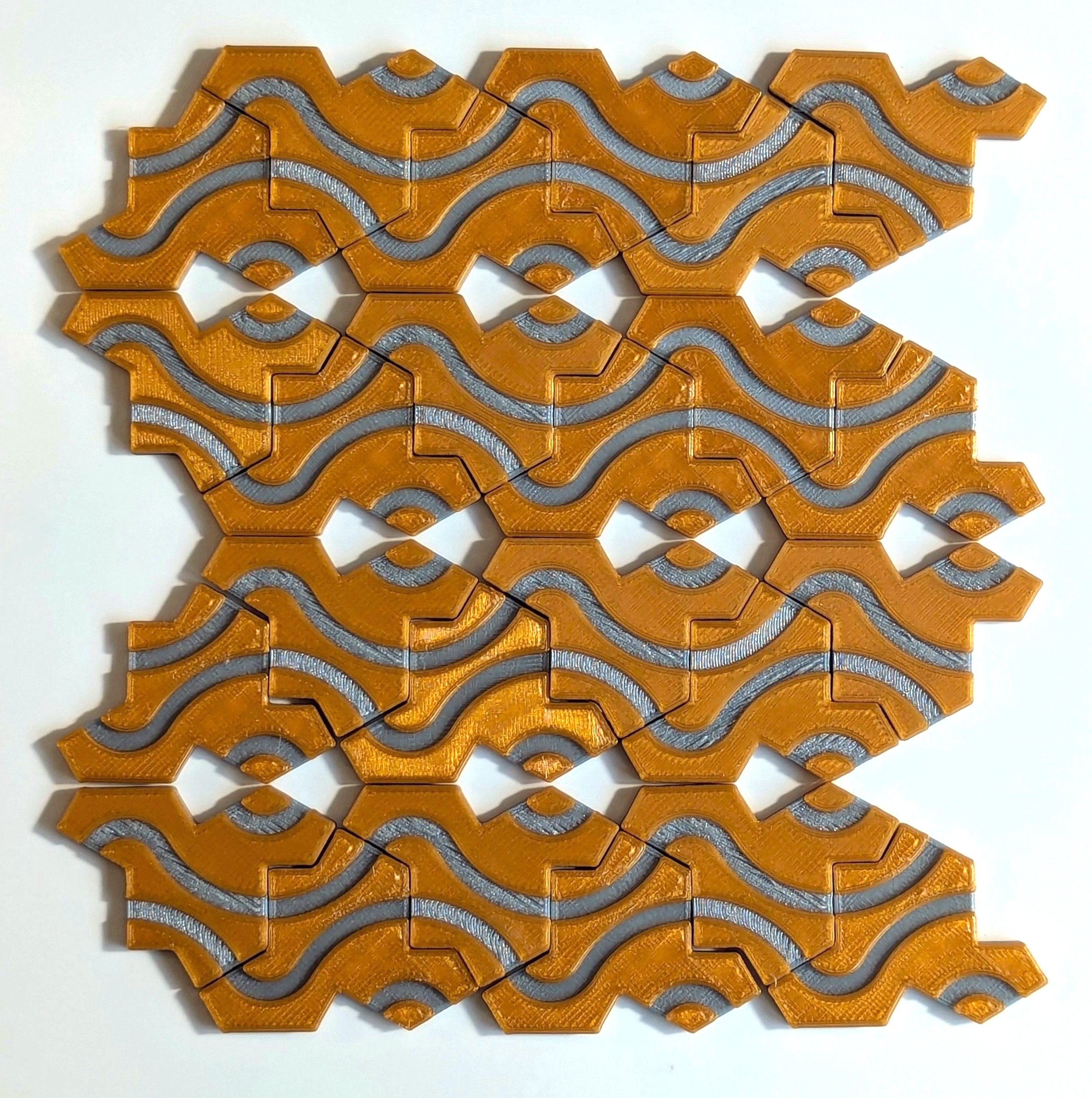
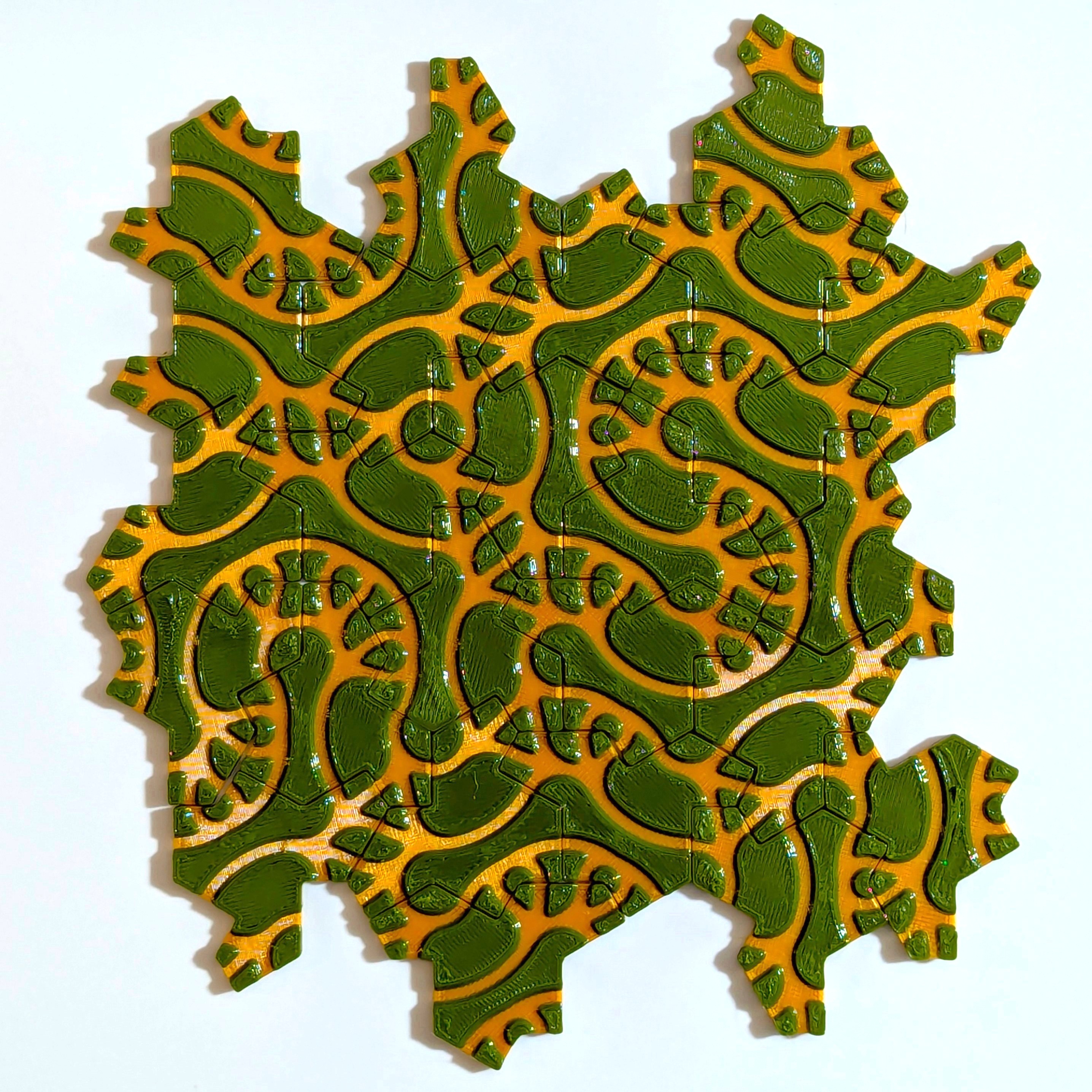
Various mosaics made with 3D printed tiles.1
Notice the gaps in the center of each star in the last image? This is a great example of something unique to aperiodic monotiles; Its only possible to create a repeating motif by leaving gaps between tiles. The only way to close the gaps is to let the tiles flow into aperiodic tessellation. Laying the tiles down this way has an unusual feeling to it, there’s no regular pattern to guide tile placement, and yet, each additional tile has a place it fits perfectly. Every tile has the same simple decoration, but when they’re together a complex design emerges.
Tools
Inspired to create tile decorations of my own, I set out to find the necessary software tools. After some searching, I found exactly what I was looking for on the forum for Rhino 3D. This thread contains an excellent assortment of both scripts and art. I modified an existing tessellation script to work on my tile decorations. I used Rhino 3D to draw my decorations on a source tile and then used Grasshopper to tessellate them.
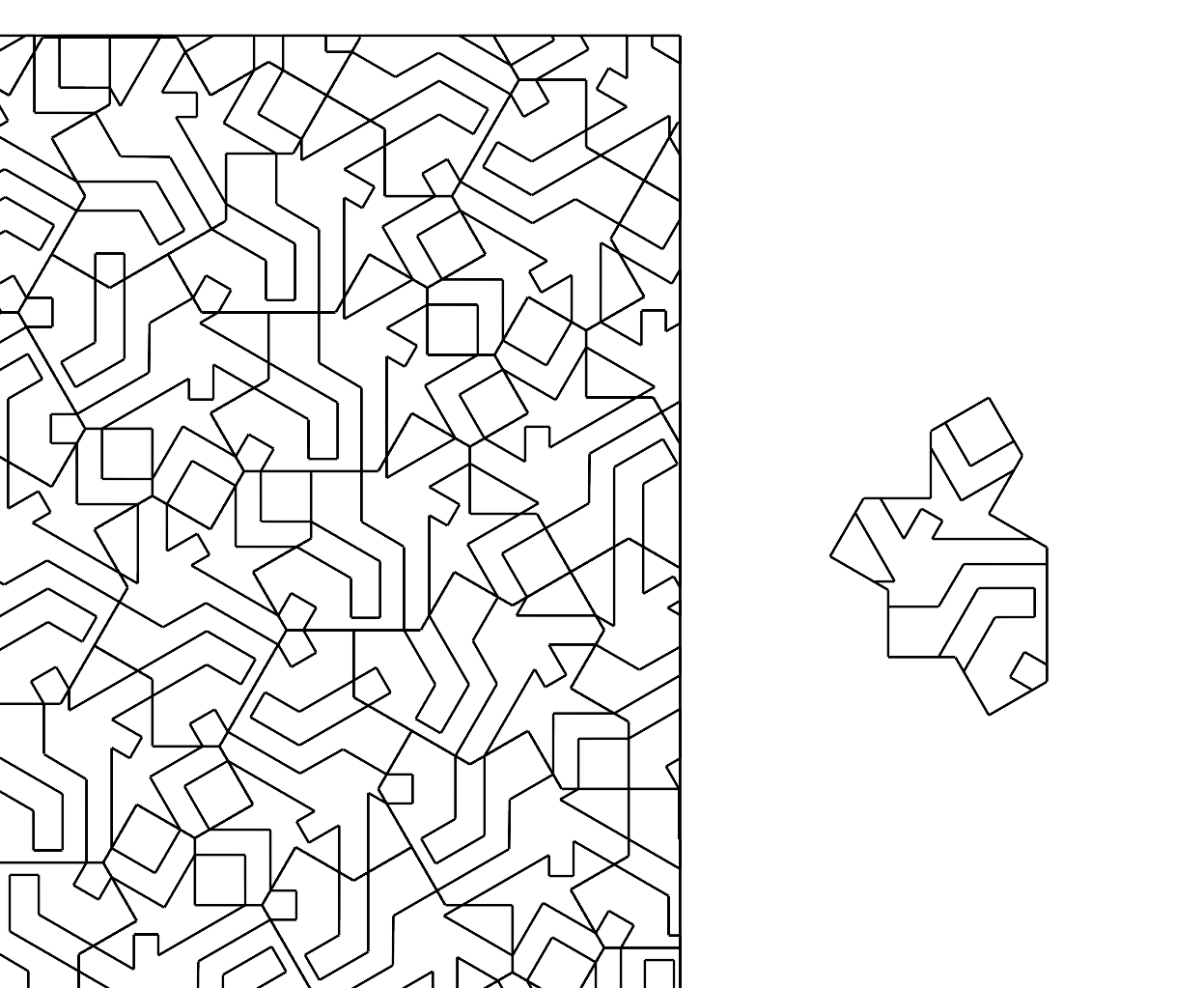
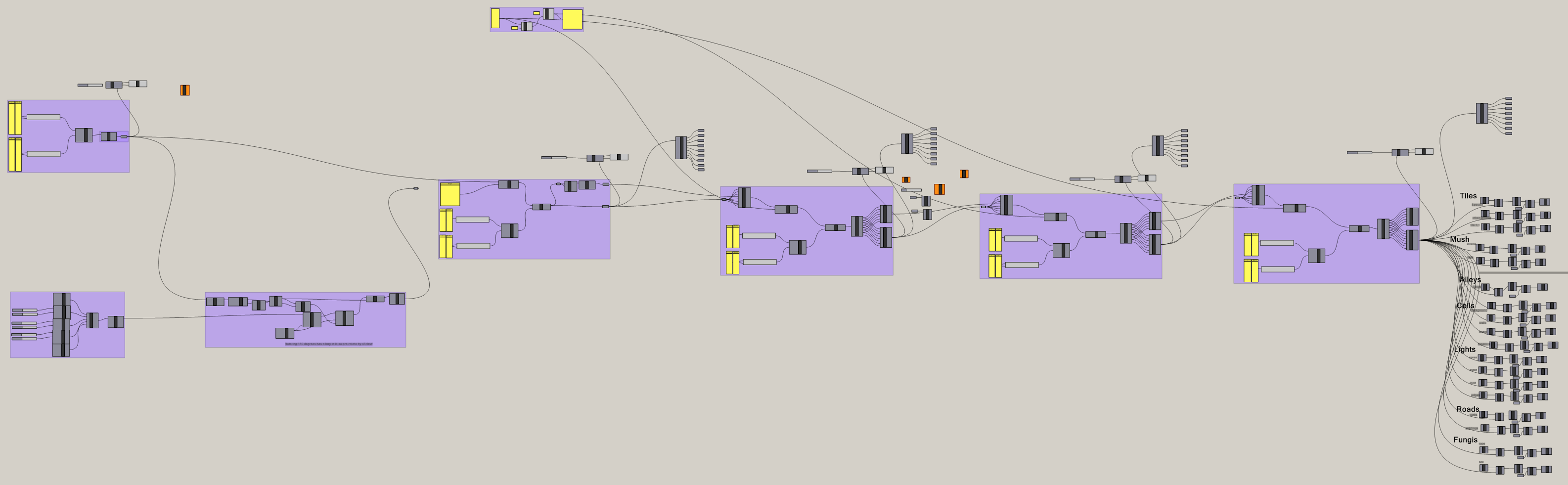
(First) A single decorated tile that’s used to tessellate the plane. (Second) A glimpse of the grasshopper script used.
After generating the tessellation, I transferred the curves into Adobe Illustrator for coloring.
Art
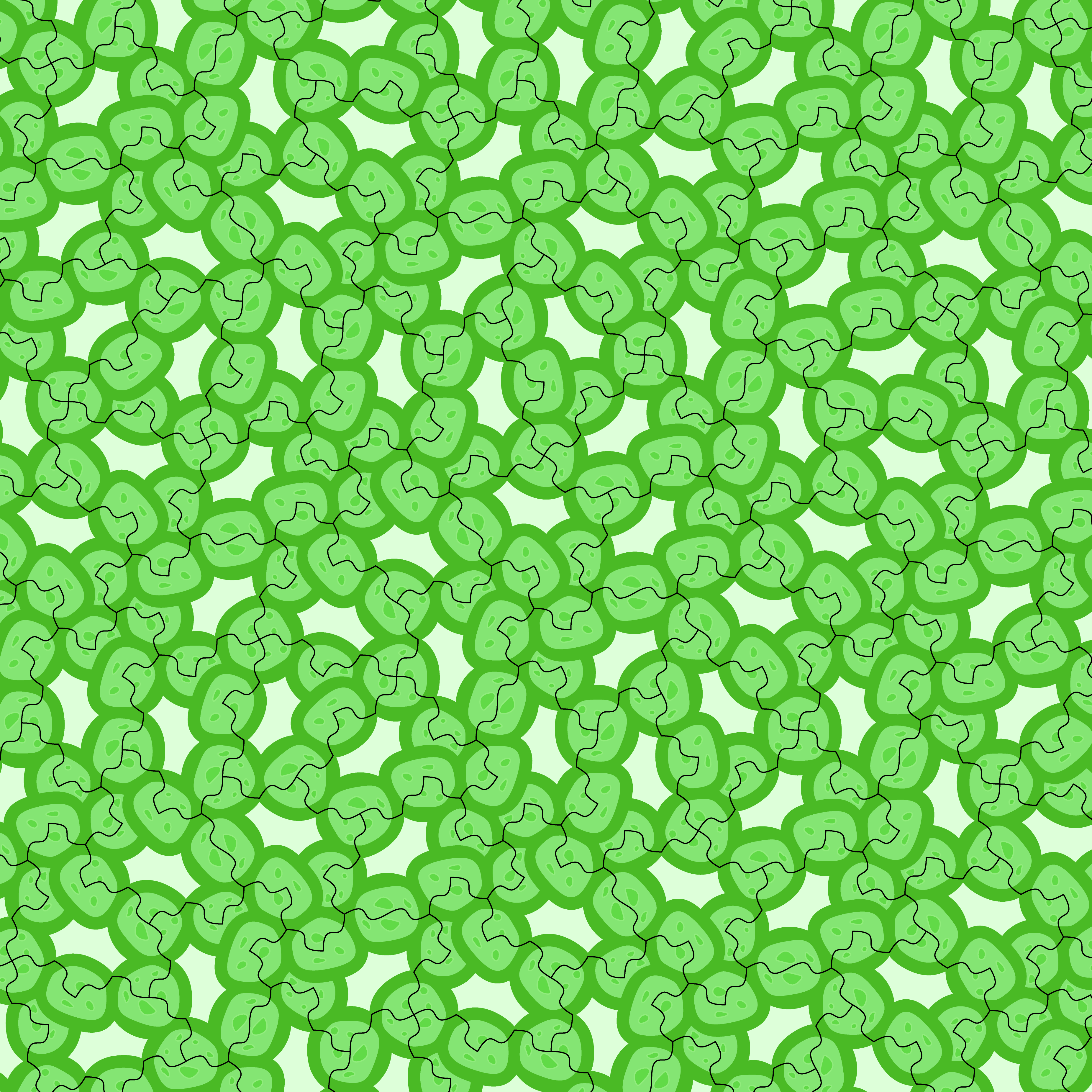
When tiles come together, something new emerges. This artwork is inspired by structures with emergent characteristics e.g. a network of roads, a multicellular organism, an organic molecule. Everyone sees something different.
Drag the bar on each image to reveal or hide the individual tiles.
Untitled 1


Untitled 2
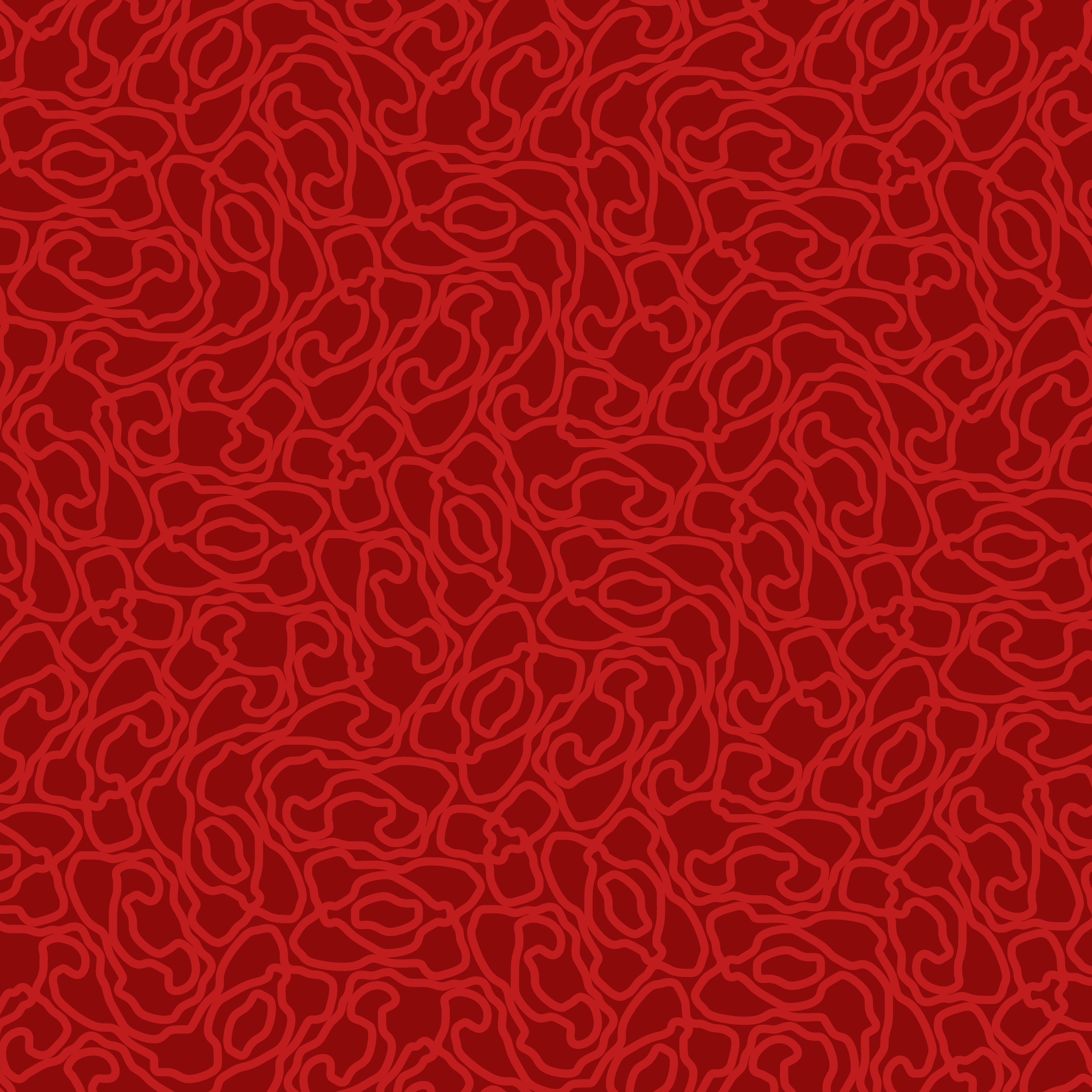
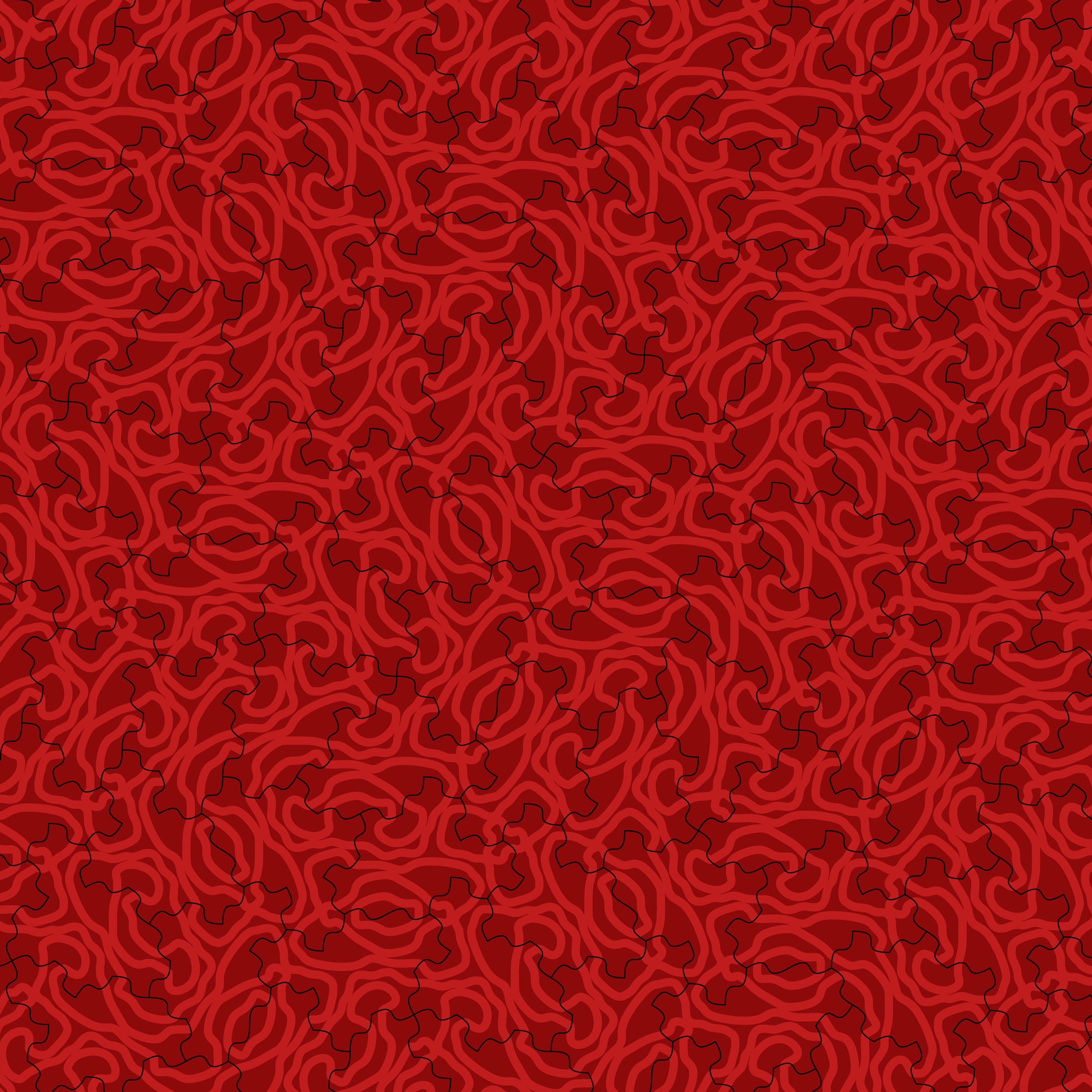
Untitled 3


Untitled 4
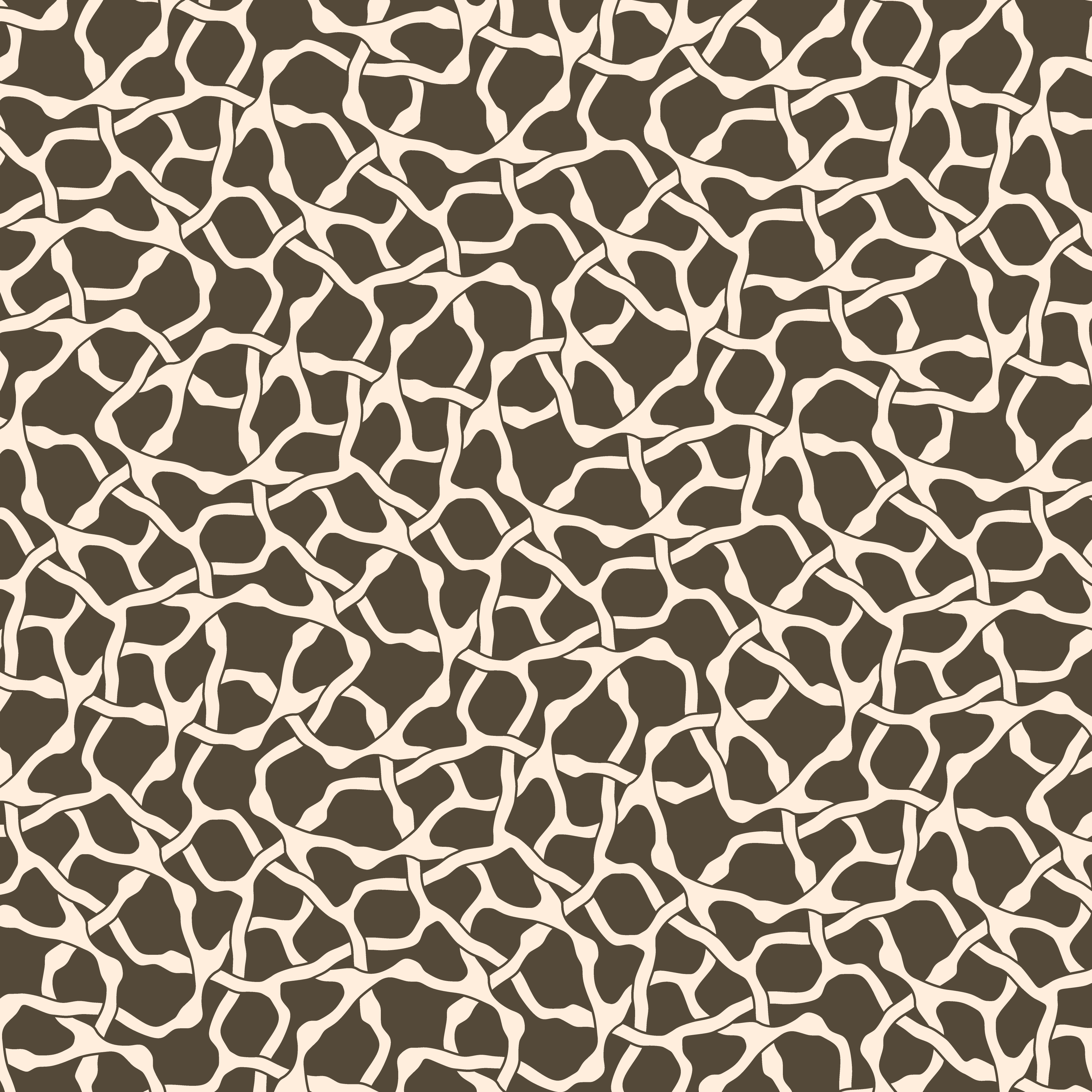
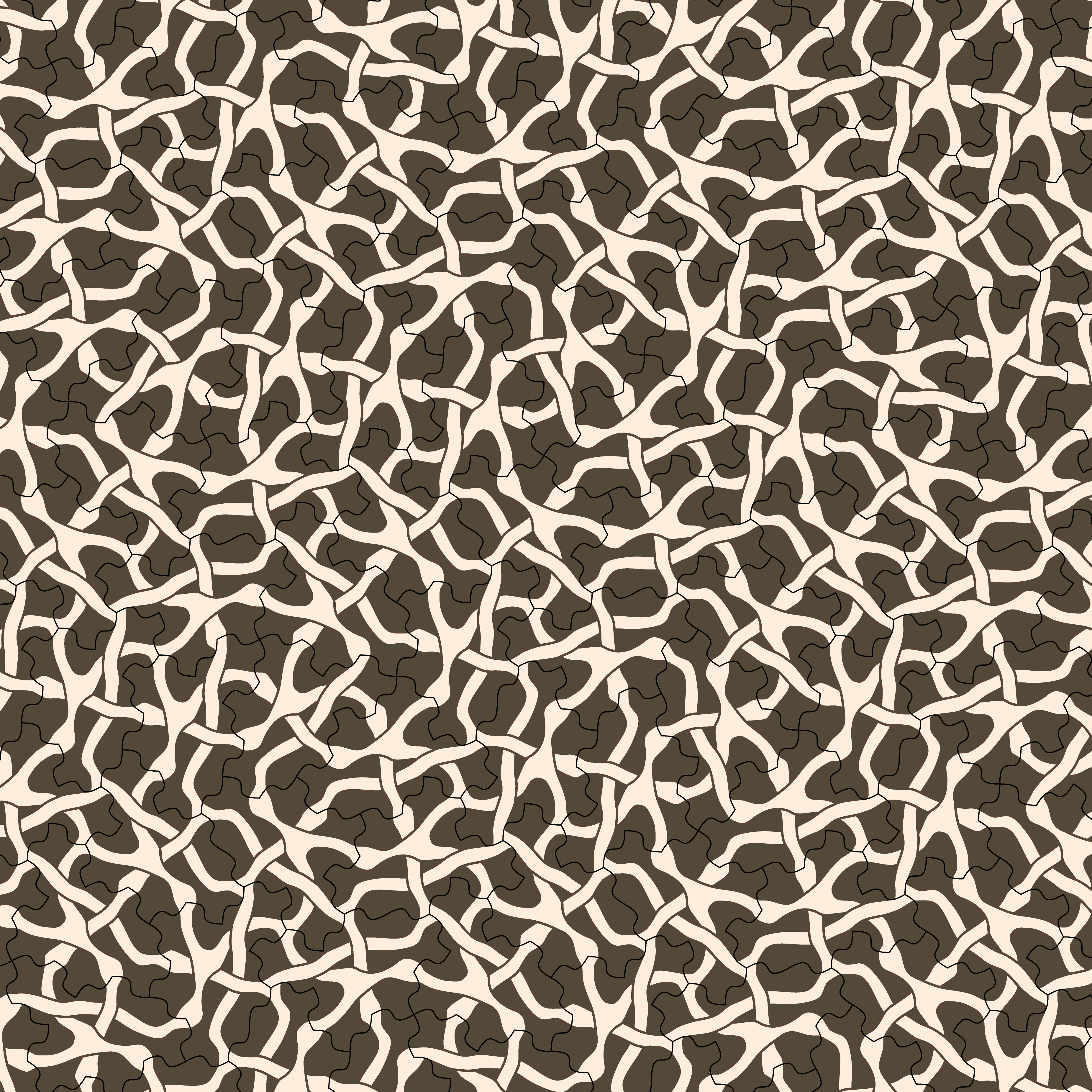
Untitled 5
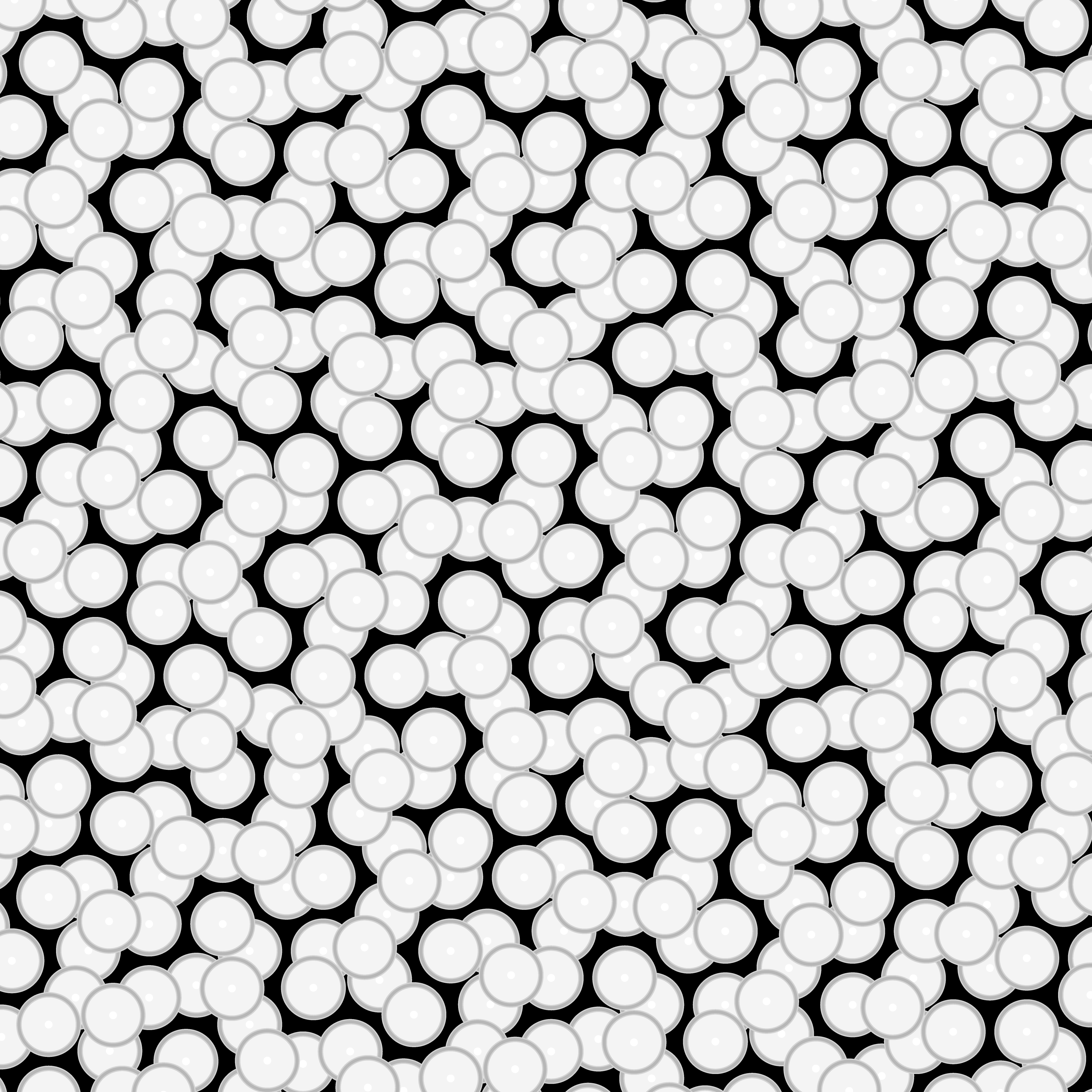
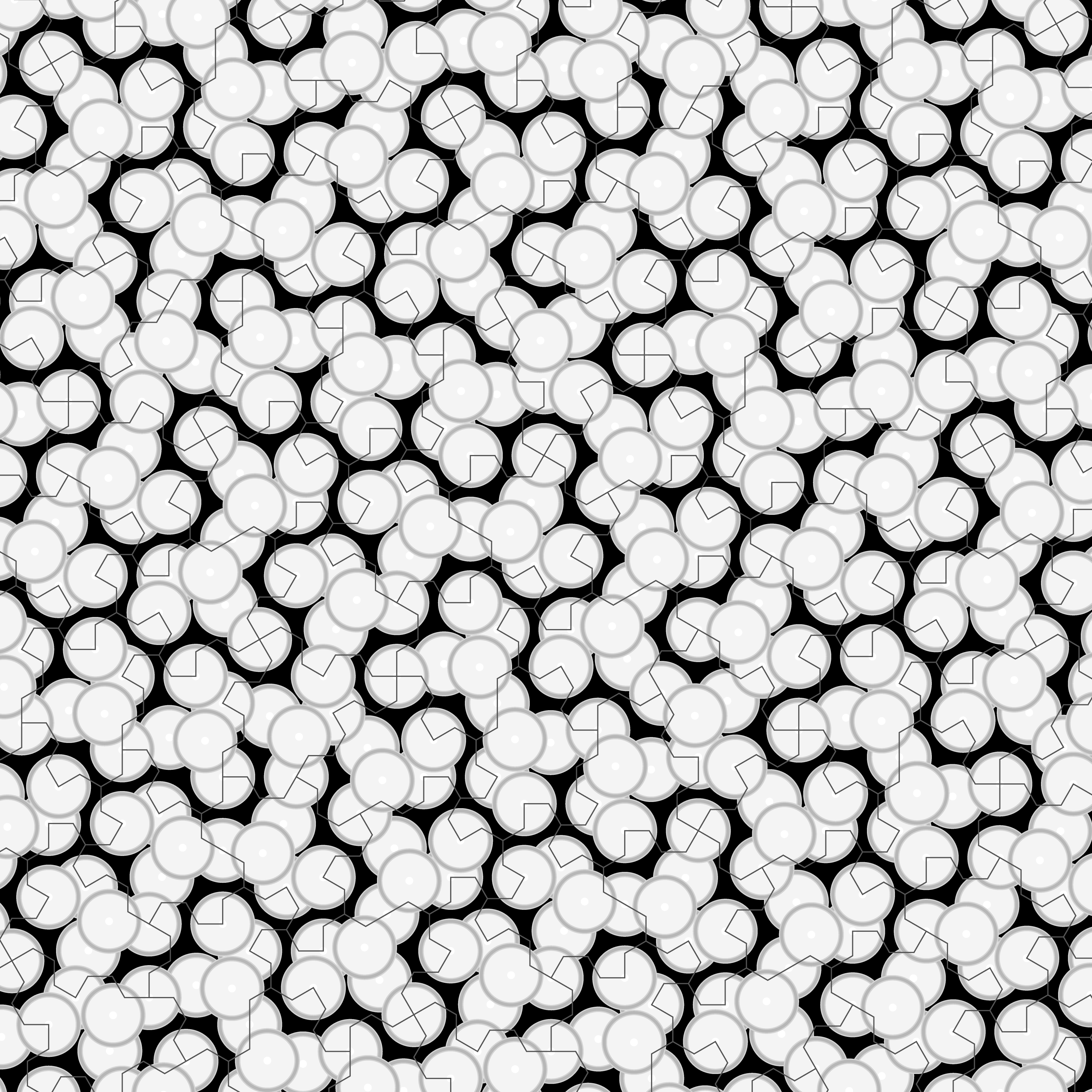
Untitled 6
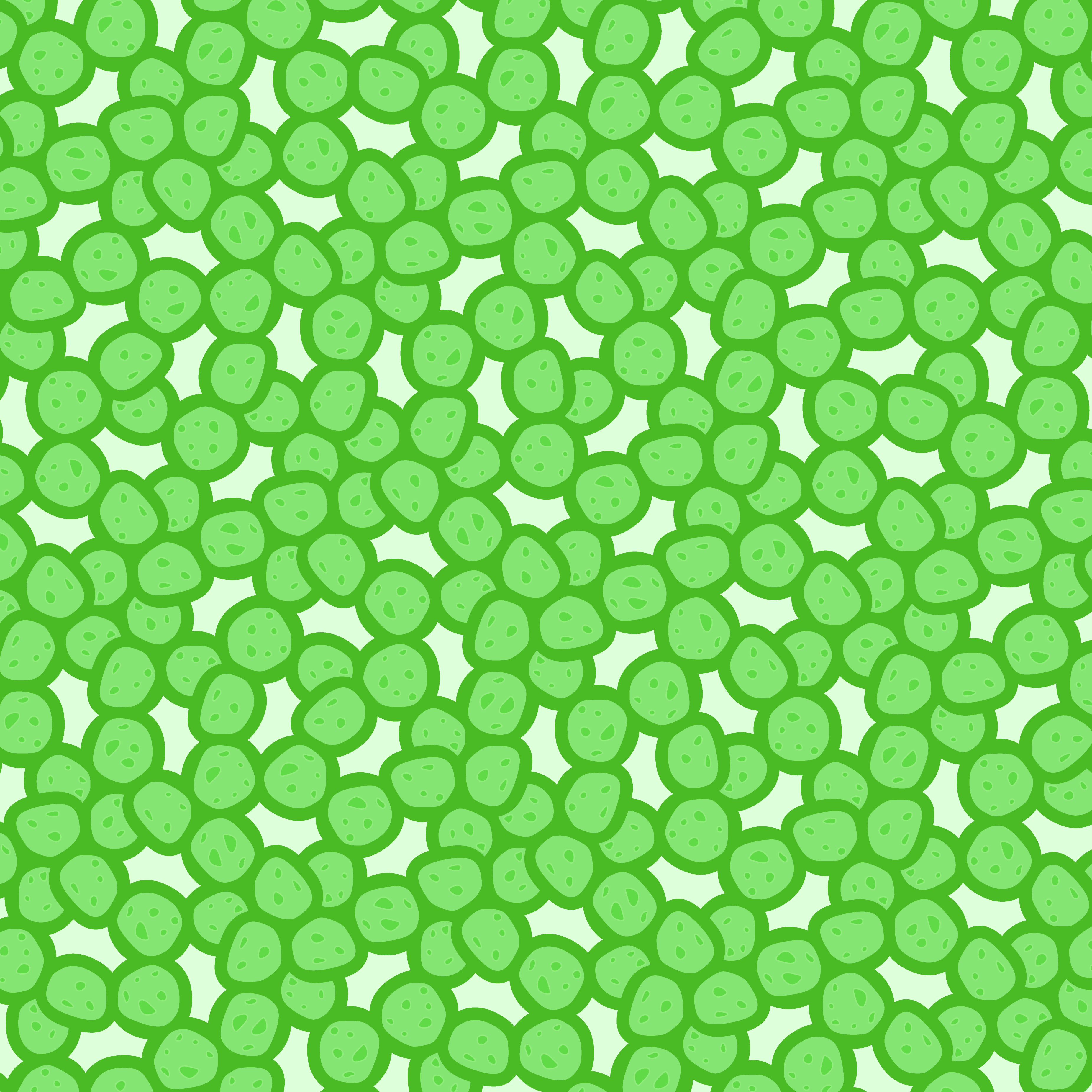
Repetition Emerges
Despite being aperiodic, repeating shapes start to emerge as we zoom out.
Untitled 4, Large
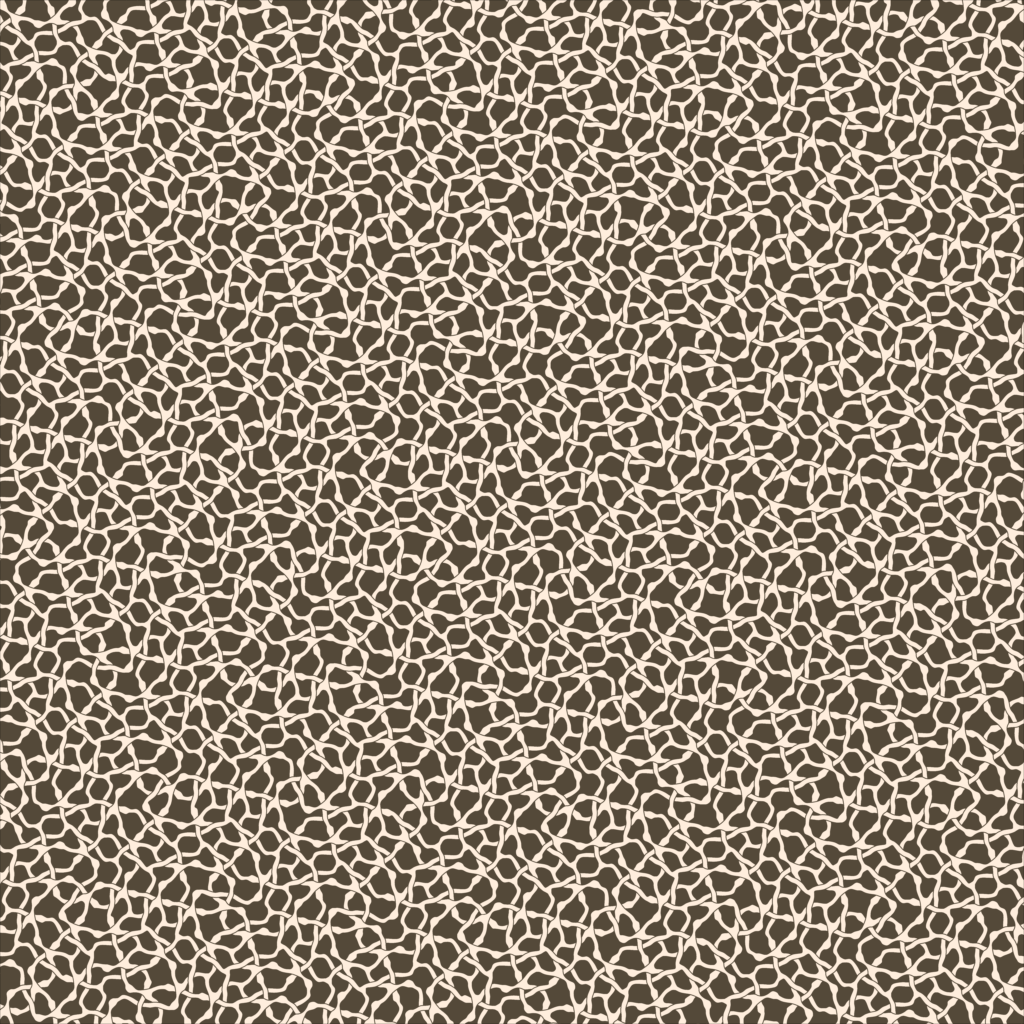
Notice the triangle-like pattern? This isn’t a trick of the eye; the repetition is real.
When Specters are tessellated, they happen to organize into small groups. These small groups tile in the same as hexagons or triangles.
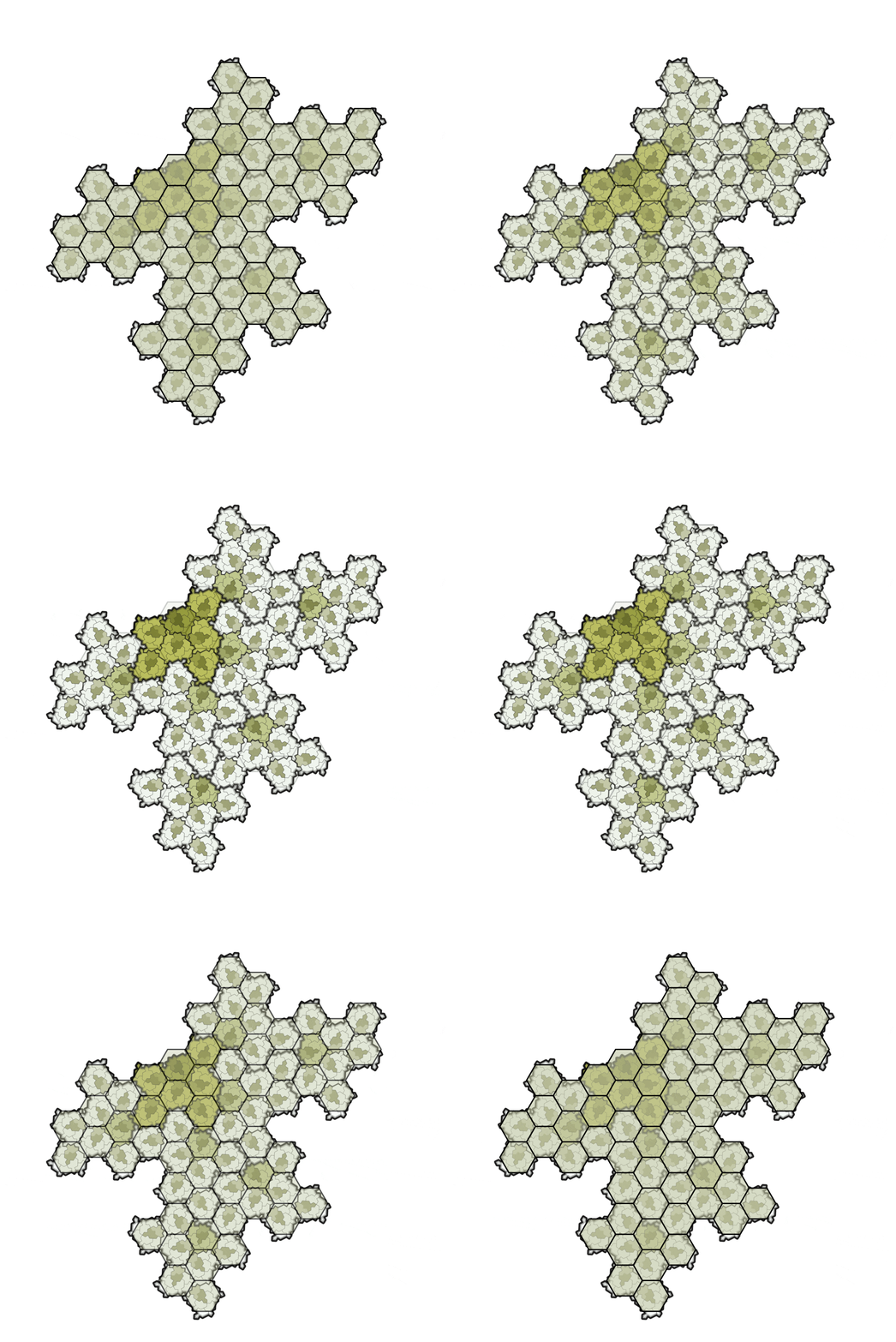
Animated fade between tessellated Specters2 and tessellated hexagons.
According to the original paper on Specter, there is always an equivalent tessellation of hexagons, but the two can’t perfectly line up. This is both the reason for orderly patterns that emerge, and why their imperfect.
I had designed the tile decorations so that larger structures would be formed when tiles were brought together. However, what I had not anticipated is that those structures would begin to look orderly as the tessellation expanded. It reminds me of the emergent symmetries in our own world, like how a how a city made of so many roads and buildings will expand into an imperfect circle.
Returning To Escher
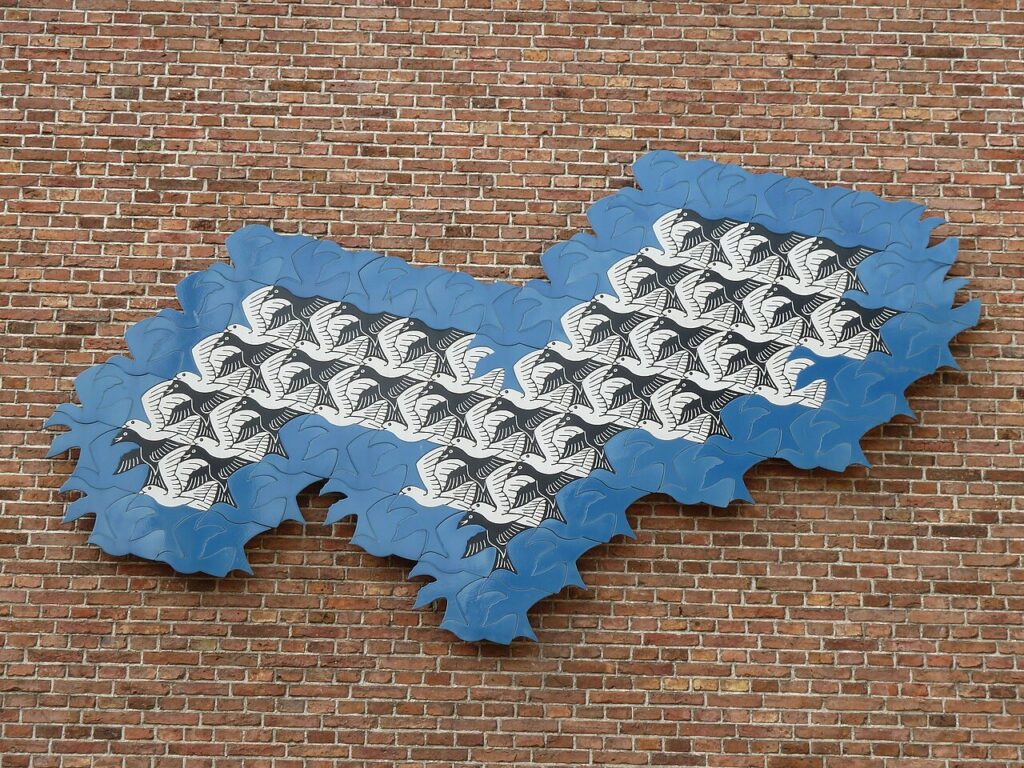
A public sculpture inspired by tessellation art of M.C. Escher.3
While my art was made to be aperiodic, the specter of periodicity crept in. It turns out that art made by tessellating Specters was not so different from art made by tessellating hexagons.
I’m reminded of the master of tessellating art, M.C. Escher. His work was my first introduction to mathematical art, and he has long been inspiration to me. I spent the final hours of this project examining his work with new eyes. I encourage the unfamiliar to peruse his playful tessellations as well.
Citations
- 3D modeling authorship for these 3D printed tiles are @bengineering on Thingaverse, @ateldsign on Printables, @ateldsign on Printables, @CarlosLuna on Printables. ↩︎
- This diagram comes from the paper “A chiral aperiodic monotile” by David Smith, Joseph Samuel Myers, Craig S. Kaplan, and Chaim Goodman-Straussis. It’s released under the CC BY license (International 4.0). My modifications to the diagram are shared alike. ↩︎
- Photograph by Bouwe Brouwer. It’s released under the Creative Commons Attribution-Share Alike 3.0 Unported license. ↩︎
