A few years ago, I was training to become a sailing instructor. After I completed my formal instructor training, I spent some time as an assistant teacher, helping out my friend and sailing mentor Mike Jarvis. In-between lectures we talked about the curriculum, and he would share his personal thoughts on the topics. During one of these discussions, he said something I hadn’t heard before; He pointed out that the cumulation of beginner’s class was understanding how to orient the sails, wind, and boat to each other. Once a sailor understands how to orient the sails, boat, and the wind, they’re sailing. It all boils down to this 3-way relationship.
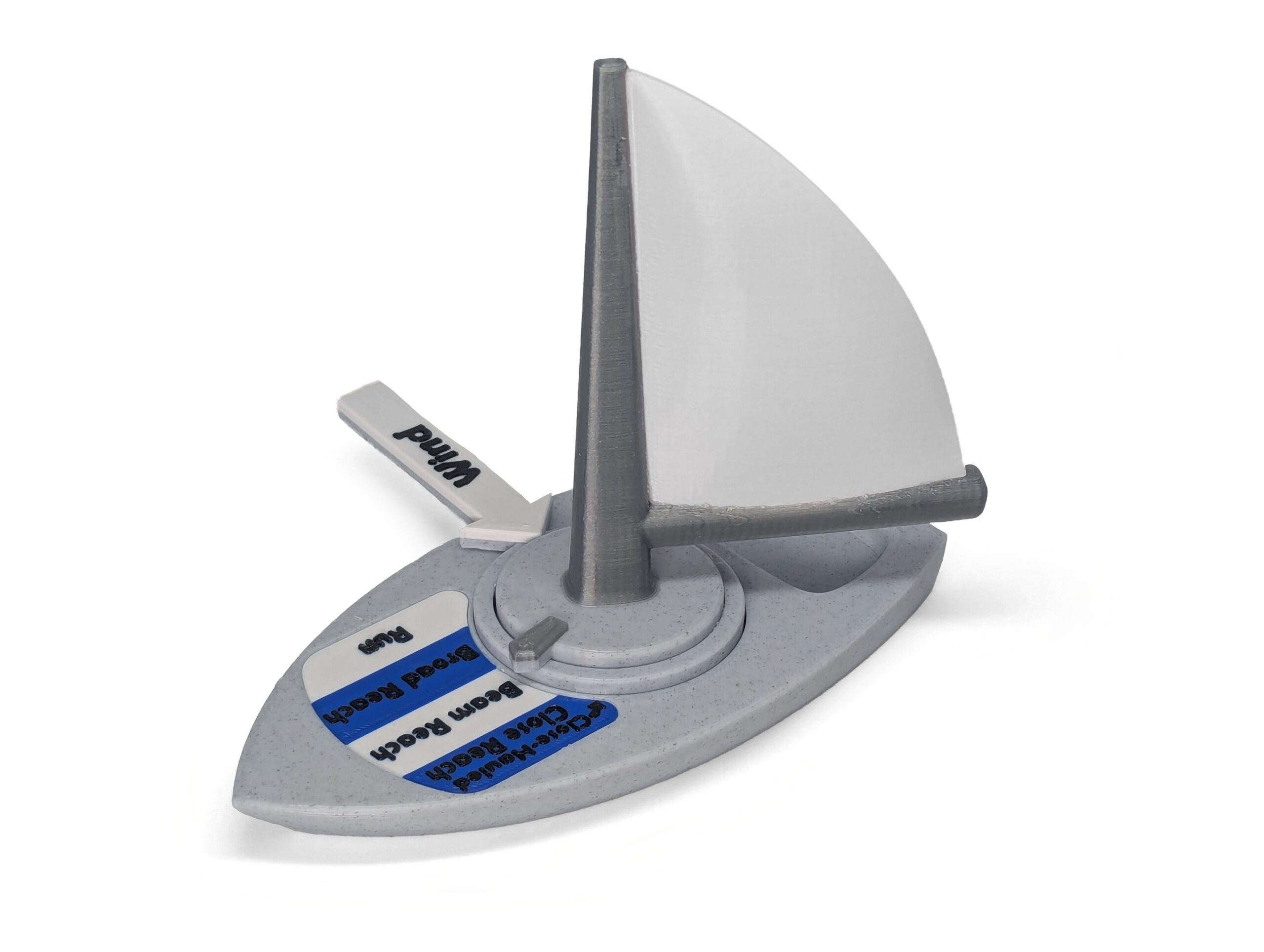
This reminded me of another 3-way mechanism, the planetary gearbox. It seemed possible that a planetary gearbox could mechanically match the way the sail, wind, and boat rotate around each other. If that gearbox were installed in a model boat, then that boat could show students how to sail. This possibility fascinated me.
I didn’t know it at the time, but I had just taken the first step in a year’s long project. A project that would span numerous prototypes, heaps of feedback, and would culminate in the creation of a one-of-a-kind teaching aid. In this blog post I’ll retell the story of how I taught sailing with a boat that sails itself.
The Plan
The first order of business was designing the planetary gearbox. Planetaries are wonderfully compact but only certain ratios between the inputs are possible. This became a problem immediately. I was getting invalid results when I tried to generate a gearbox for the ratios I needed. The project stalled at this point and only after a healthy amount of research, experimentation, and one late night realization, did I find my gearbox. Check it out in motion in the video below:
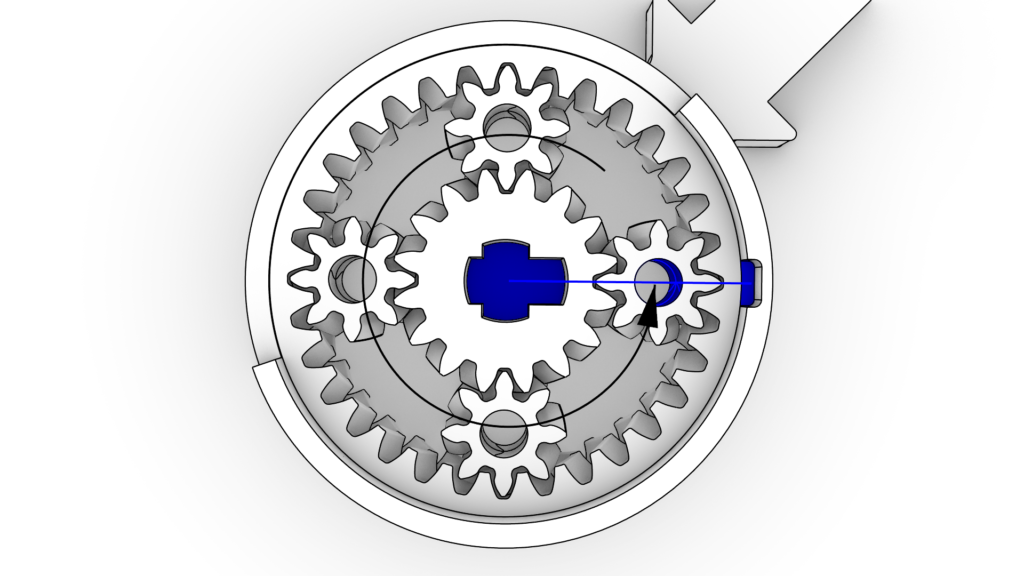
The solution was possible with this arrangement of inputs:
- The green ring gear rotates the wind.
- The red carrier rotates the sail.
- The cyan sun gear rotates the boat.
This approach oversimplifies sail trim a little, but is close enough for teaching beginner sailors. Another limitation of my approach is that the wind has to be locked to one side of the model. This feature was also omitted for simplicity but, as I will discuss later, it should have been included.
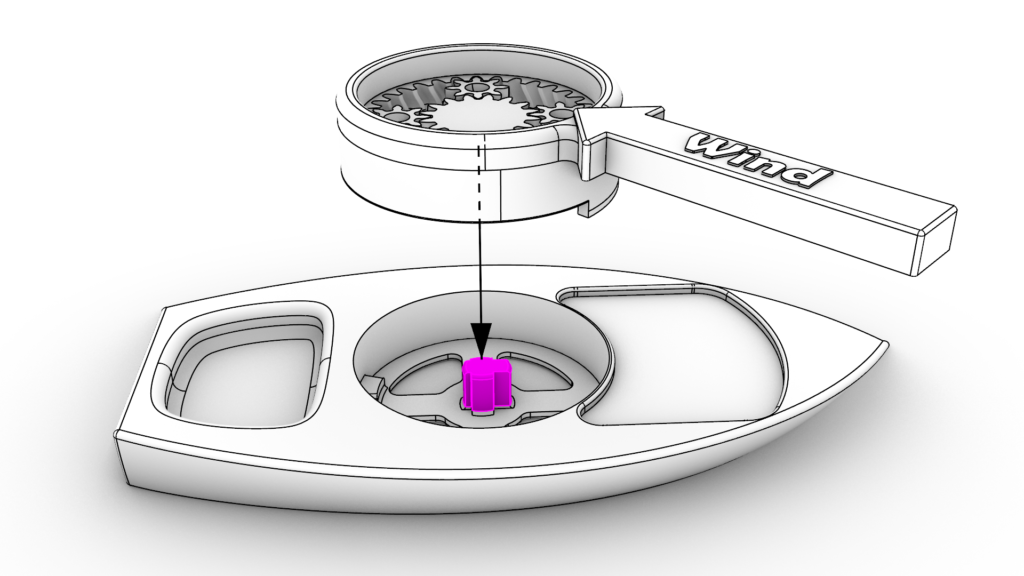
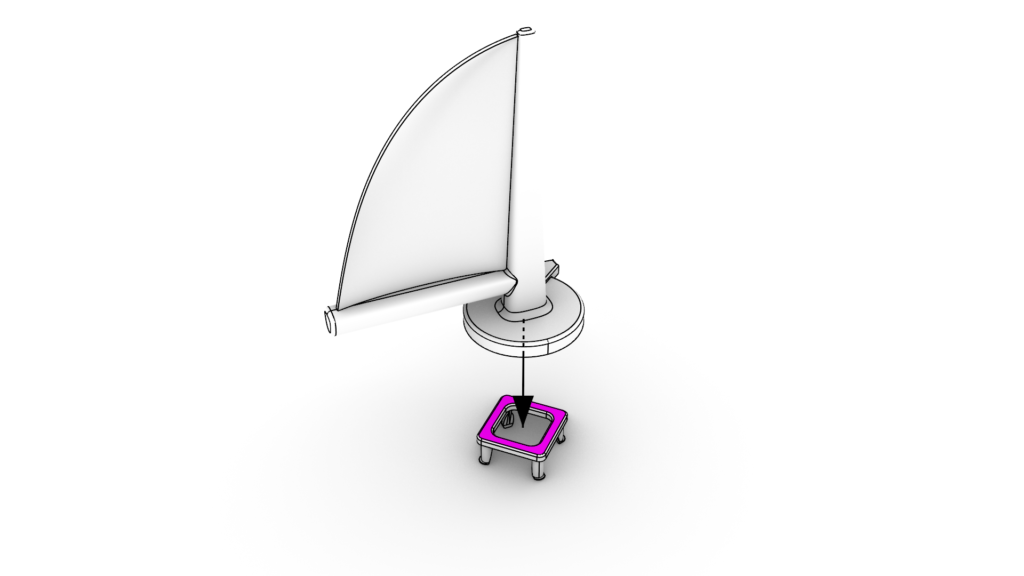
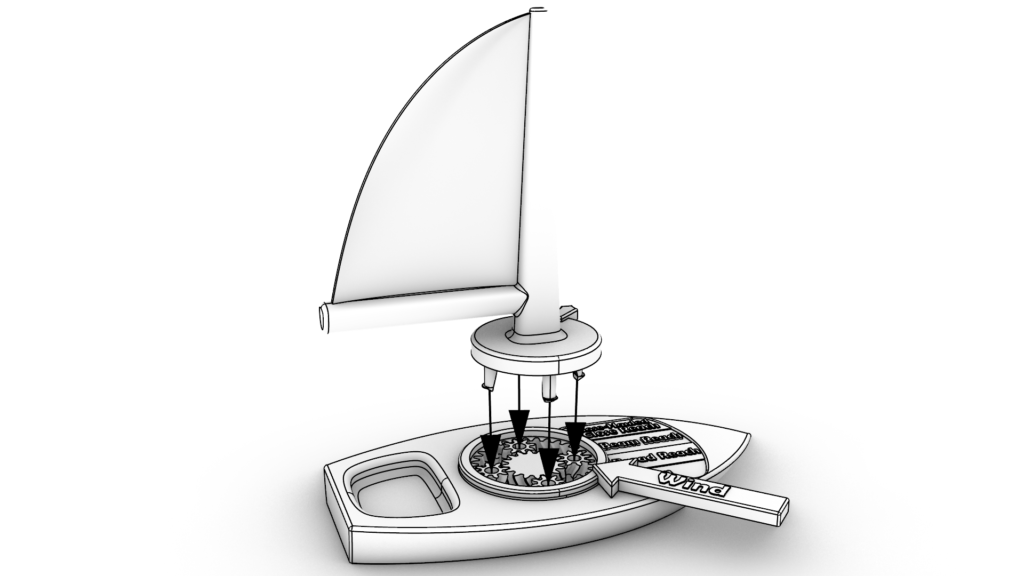
With the planetary gearbox designed, it was time to make the rest of the model boat. I fairly quickly sketched out how the sails, wind, and boat could go together.
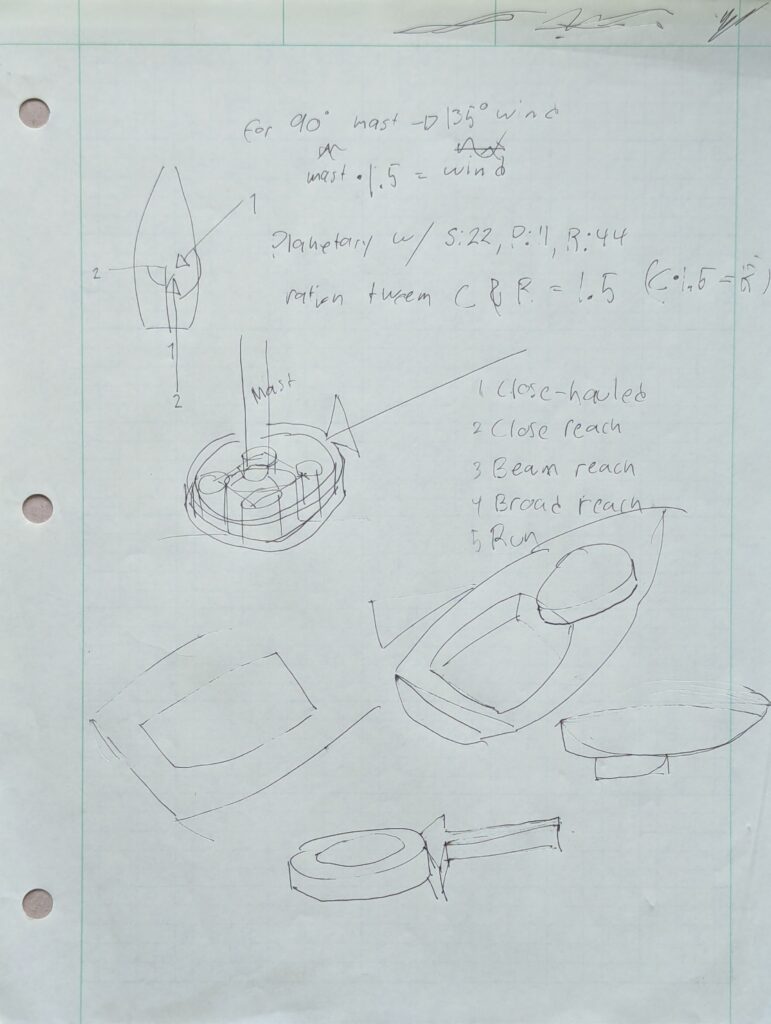
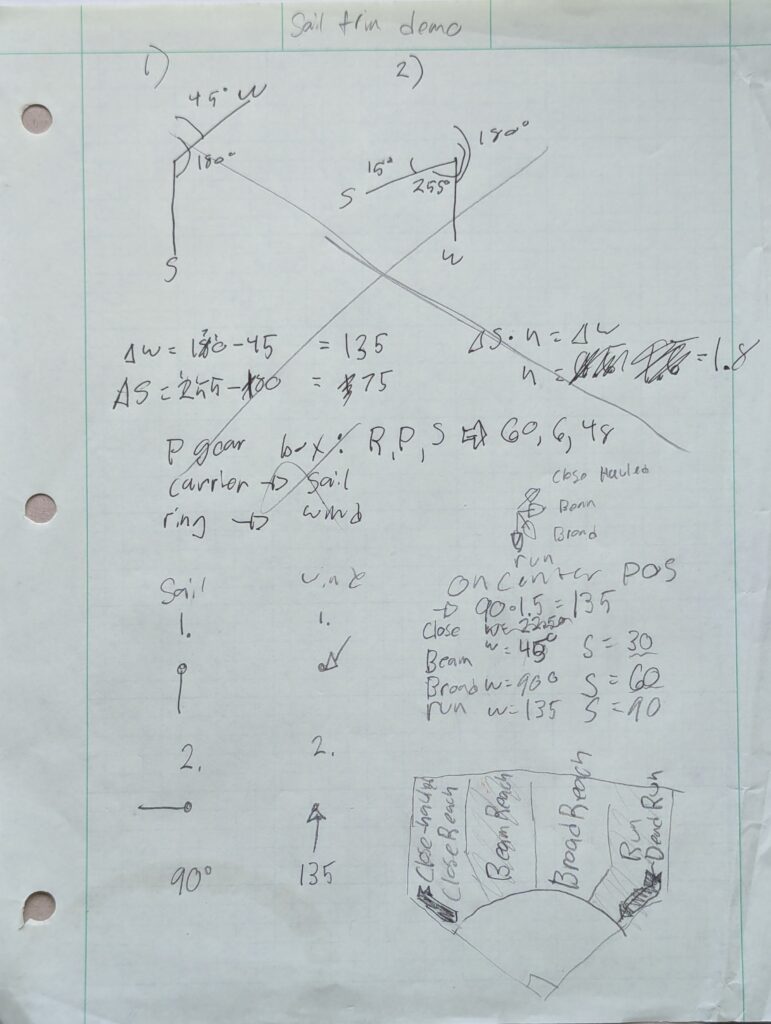
Initial sketches of the sailboat mechanism.
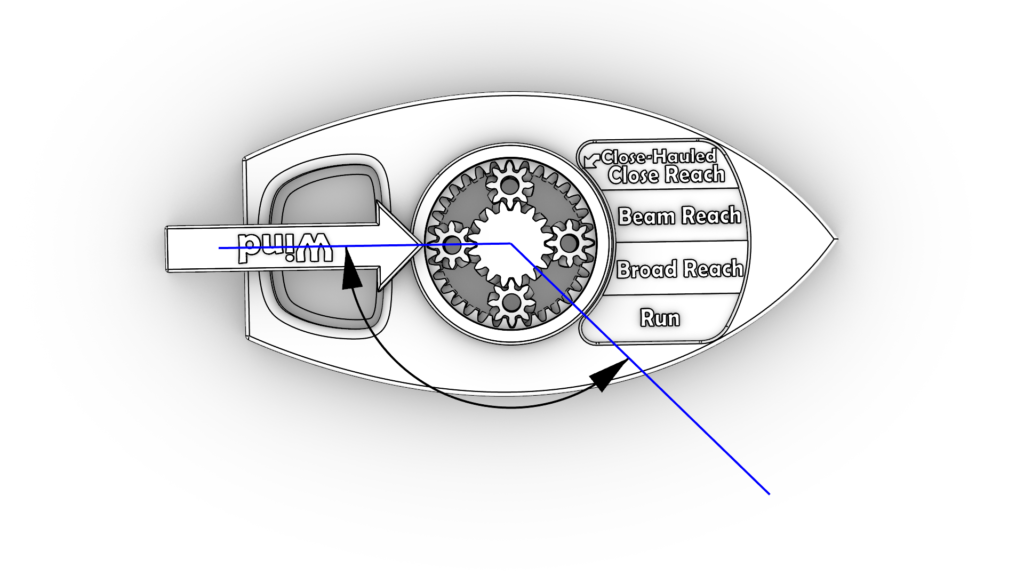
While sketching I thought up another feature: a dial that indicates the current “Point of Sail.” For the unfamiliar, the “Points of Sail” describe how a boat and its sail are oriented in the wind. The 5 points of sail are: Close Hauled, Close Reach, Beam Reach, Broad Reach, and Run1. Since the planetary gearbox is already a mechanical calculator for the Point of Sail, the dial indicator was an easy addition. I was hopeful that having the nomenclature on the model would help novice sailors attach words to what they see. With a clear vision, I was ready to start modeling the parts.
Drafting
My intent was to design a model that anyone could 3D print. Basically, a 3D printable kit. Having printed other people’s files, as well as publishing my own, I knew there were a few guidelines to follow when drafting models to share. Just to name a few:
- Avoid requiring external hardware.
- Minimize the use of supports.
- Avoid tight tolerances.
- Provide an assembly manual.
To explain how I worked around these constraints I’ll walk through the process of designing the gearbox. Planetary gearboxes are hard to assemble, so I made the gearbox “print-in-place.” This means that the gearbox comes out of the printer fully assembled. This convenience comes at a cost though, because now the printer needs to be very precise or else the gears will melt together during printing. Since this needs to print on other people’s printers too, I can’t assume that the printer will be precise. To accommodate this, I had to increase the spaced between the gears. Perversely, when there’s more space between gears, a precise printer will produce a wobbly gearbox. So, in order to mechanically stabilize the wobbly gearbox, I had to recess it into the boat hull. The resulting gearbox is easy for anyone to manufacture, but at the cost of design time.

With my first sailing class coming up I had limited time to work around these constraints. Like any work done on a deadline, I had to make compromises. Some of these compromises I got right, and others I would have to revisit. In a later section I’ll discuss the feedback I got from the wider 3D-printing community and how I integrated it.
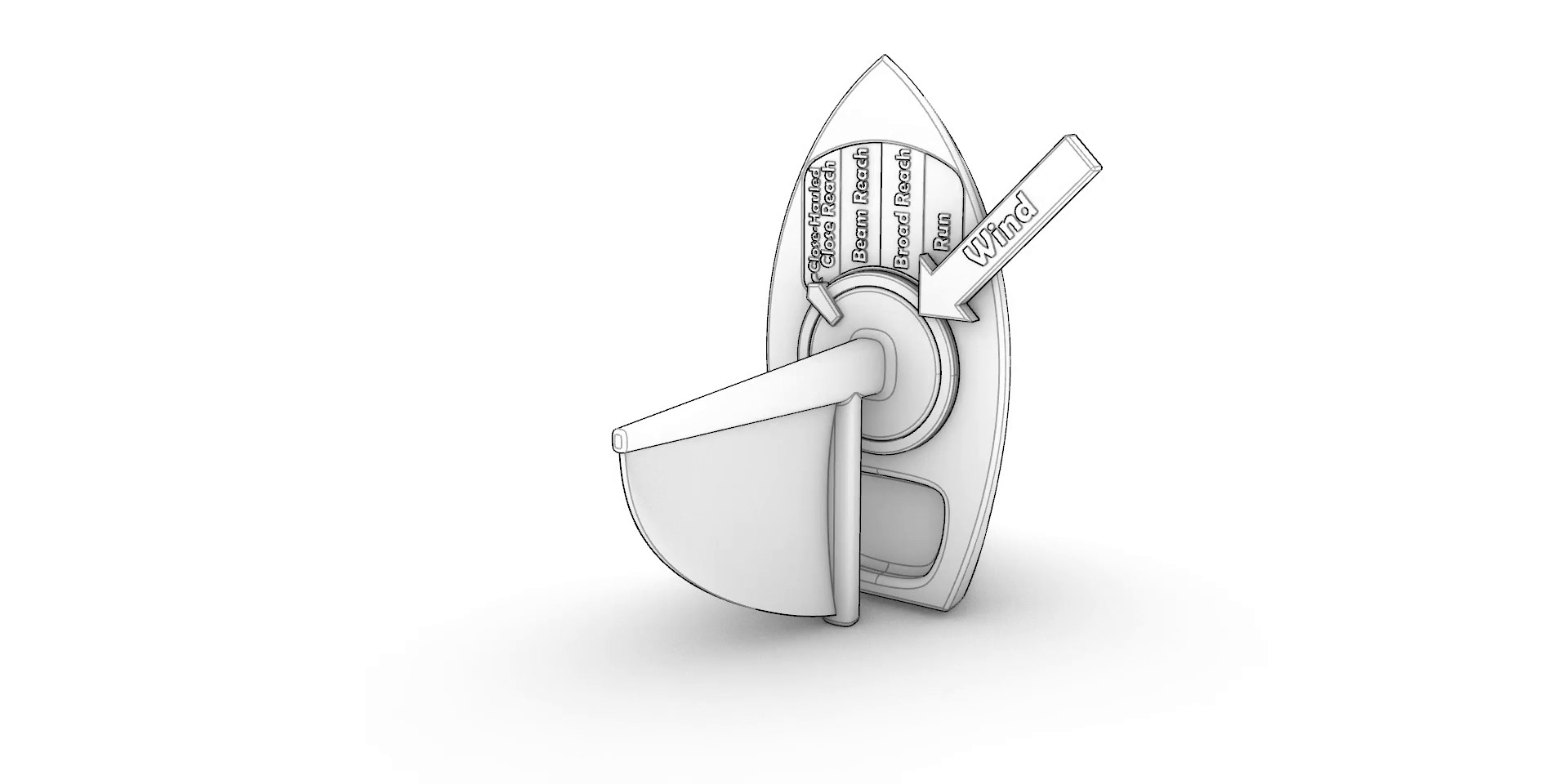
Interactive sailboat assembly. Click and drag to explode the CAD model.
With the drafting nearly complete I started the process of tuning the overall fit-and-finish with test prints. After a few iterations the functionality was working great! Check it out in motion:
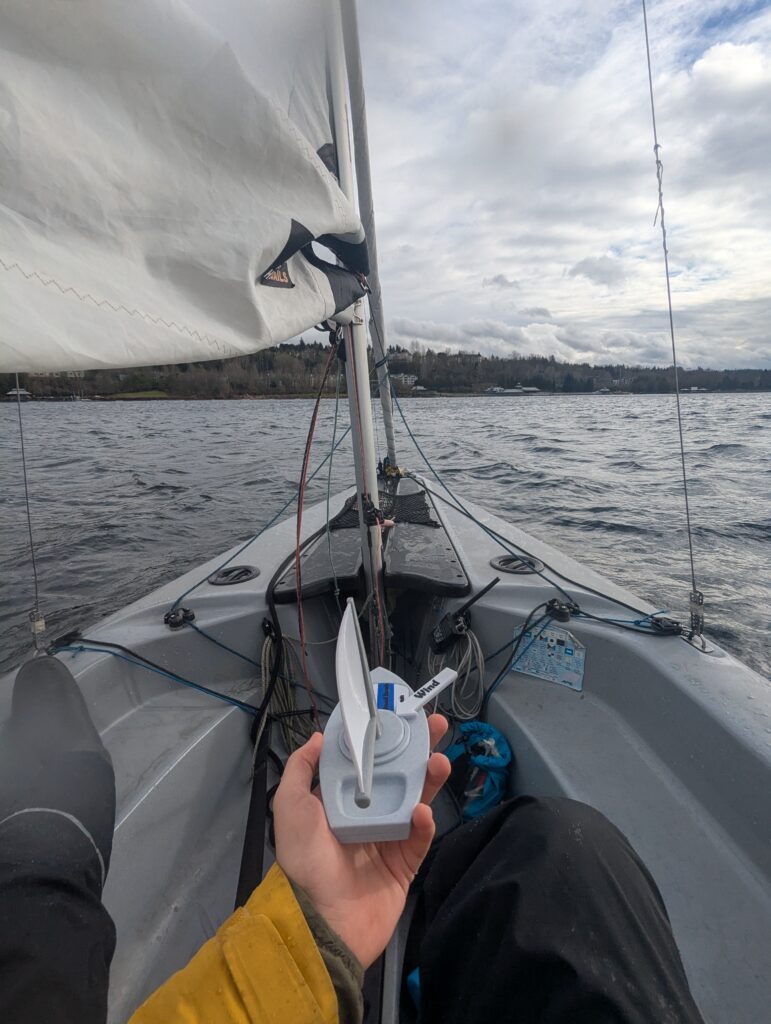
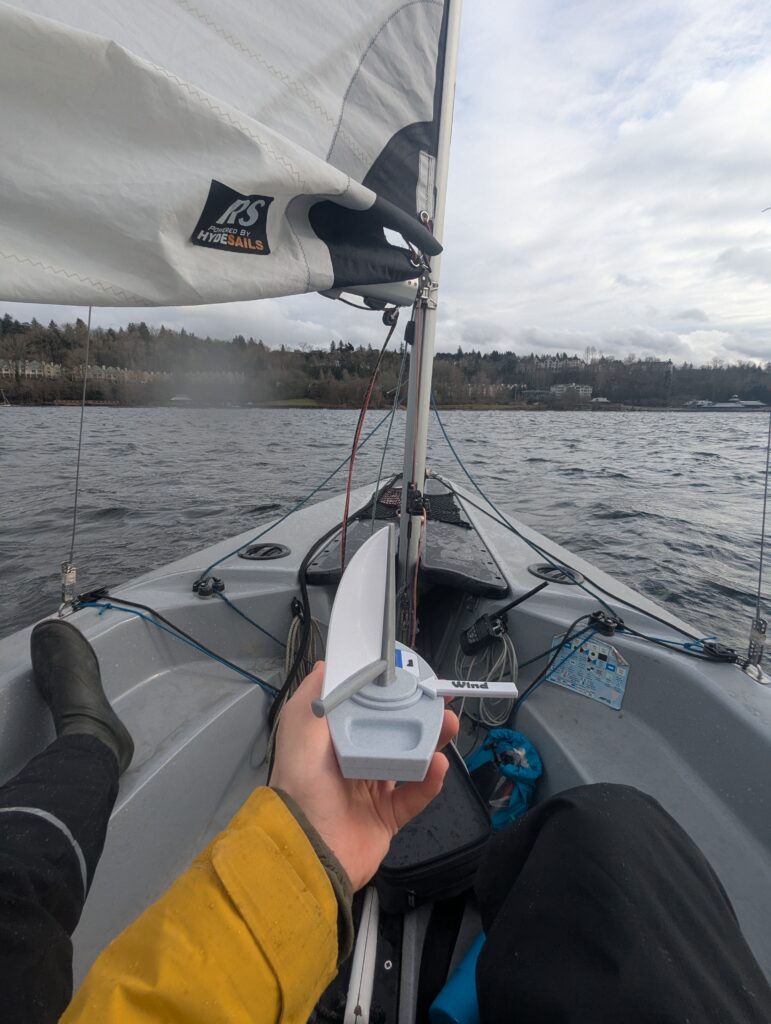
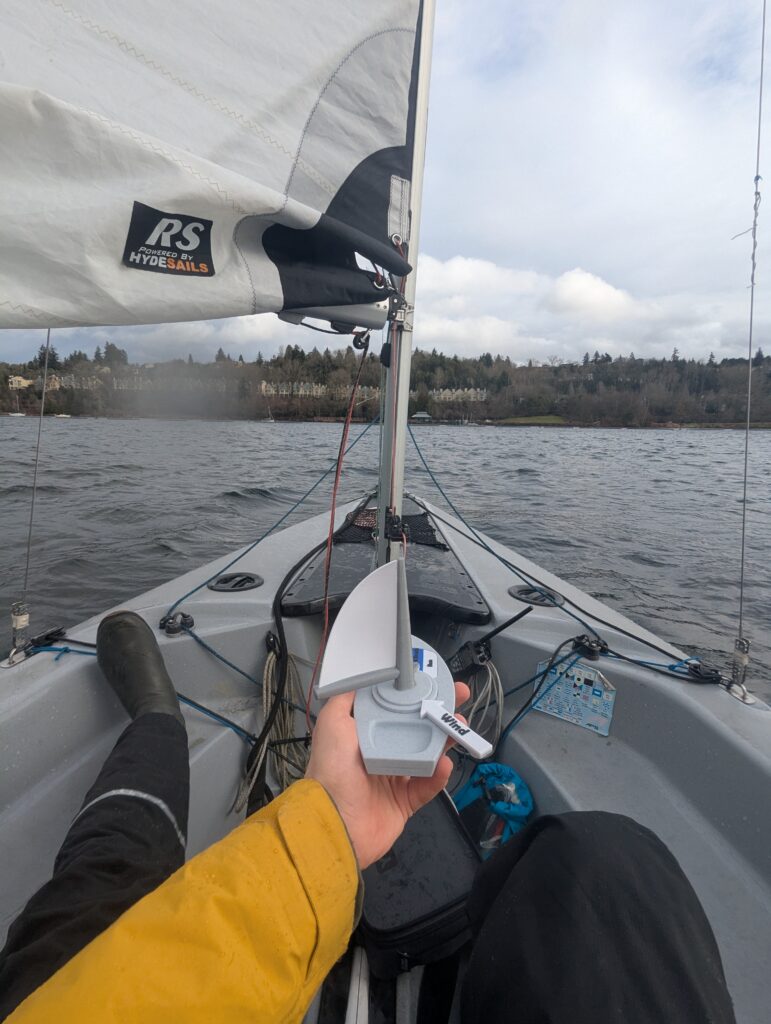
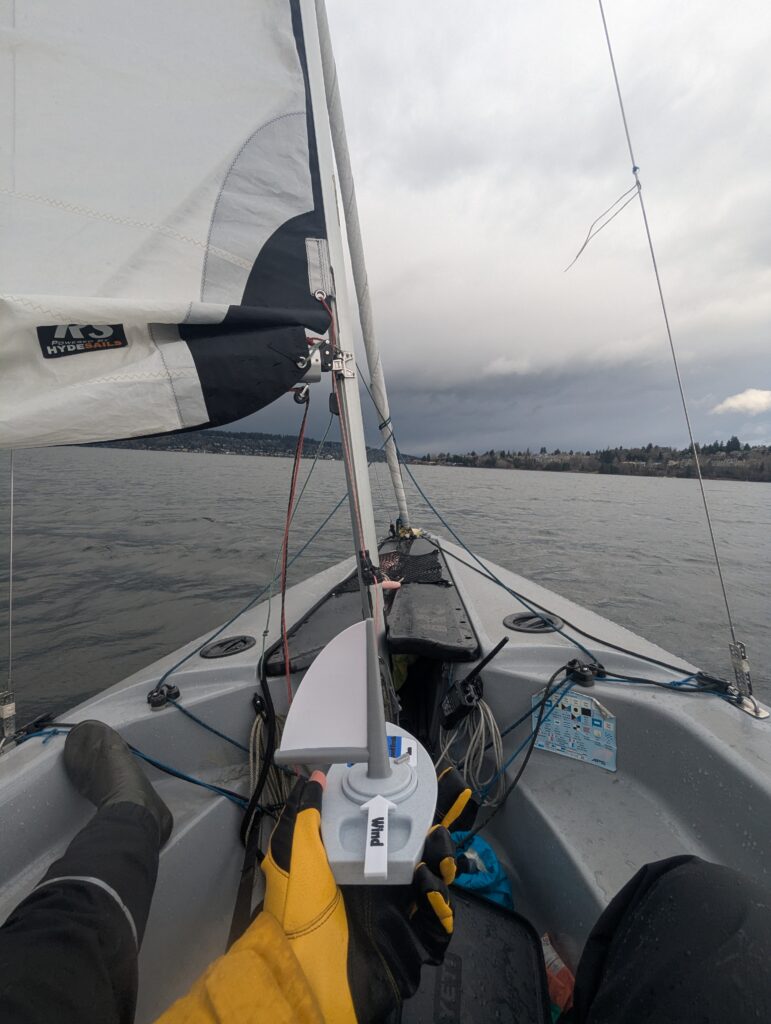
The model and a sailboat going through the points of sail together.
The version shown here is the final version. In the next part I’ll describe how the first working prototype was improved on by integrating feedback from my students.
Field Tests
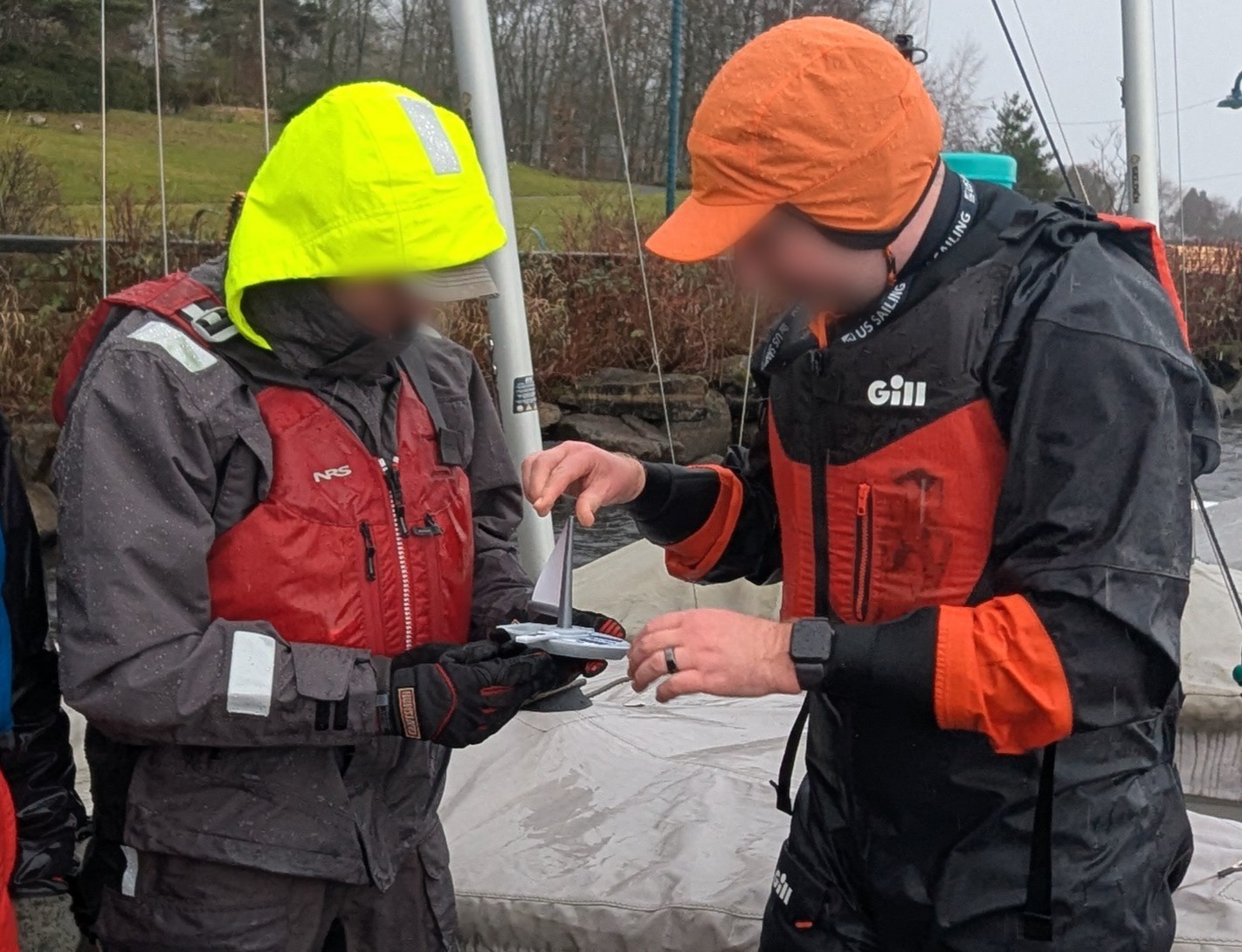
I had barely finished printing the first batch of sailboats in time for my class, having to stay up late assembling the boats. As part of my sail trim lecture, had my students partner up and play around with the models.
Responses varied person to person. After the activity, a few students were eager to talk about their new sailing insights. For others, this was just a small part of the overall curriculum. I watched my students sail after the activity, and my own observations matched what students were telling me; For a small number of people, it made a big difference. While the first version saw some success, I was also taking note of the issues students were having.
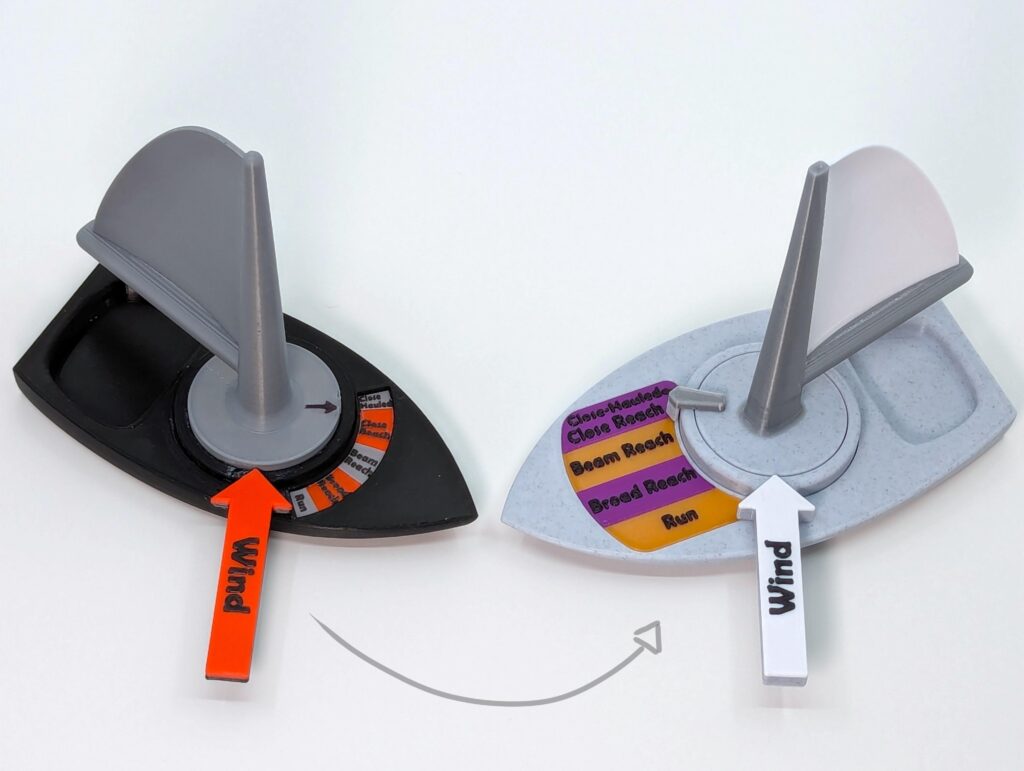
The biggest issue with the model was the size of the text. I knew the text layup wasn’t great, but I was surprised by how bad it was in practice. When the boats were passed around, students were immediately squinting, and a few had to run off to find their reading glasses. One retirement-aged student entirely gave up on trying to read it and had his partner read everything out loud for him. In the next iteration, I widened the entire model so the text could be nice and big.
The model also became useful for teaching in ways I hadn’t plan for. While articulating the model, students were asking me if their boat had gone through a tack2. The model wasn’t particularly helpful in explaining tacks, because the internal mechanism physically won’t let it tack. If I could modify the model to be able to tack, then the full concept could be explained with just one prop. Unfortunately, adding tacking would require a total mechanical overhaul, something I wasn’t willing to do.
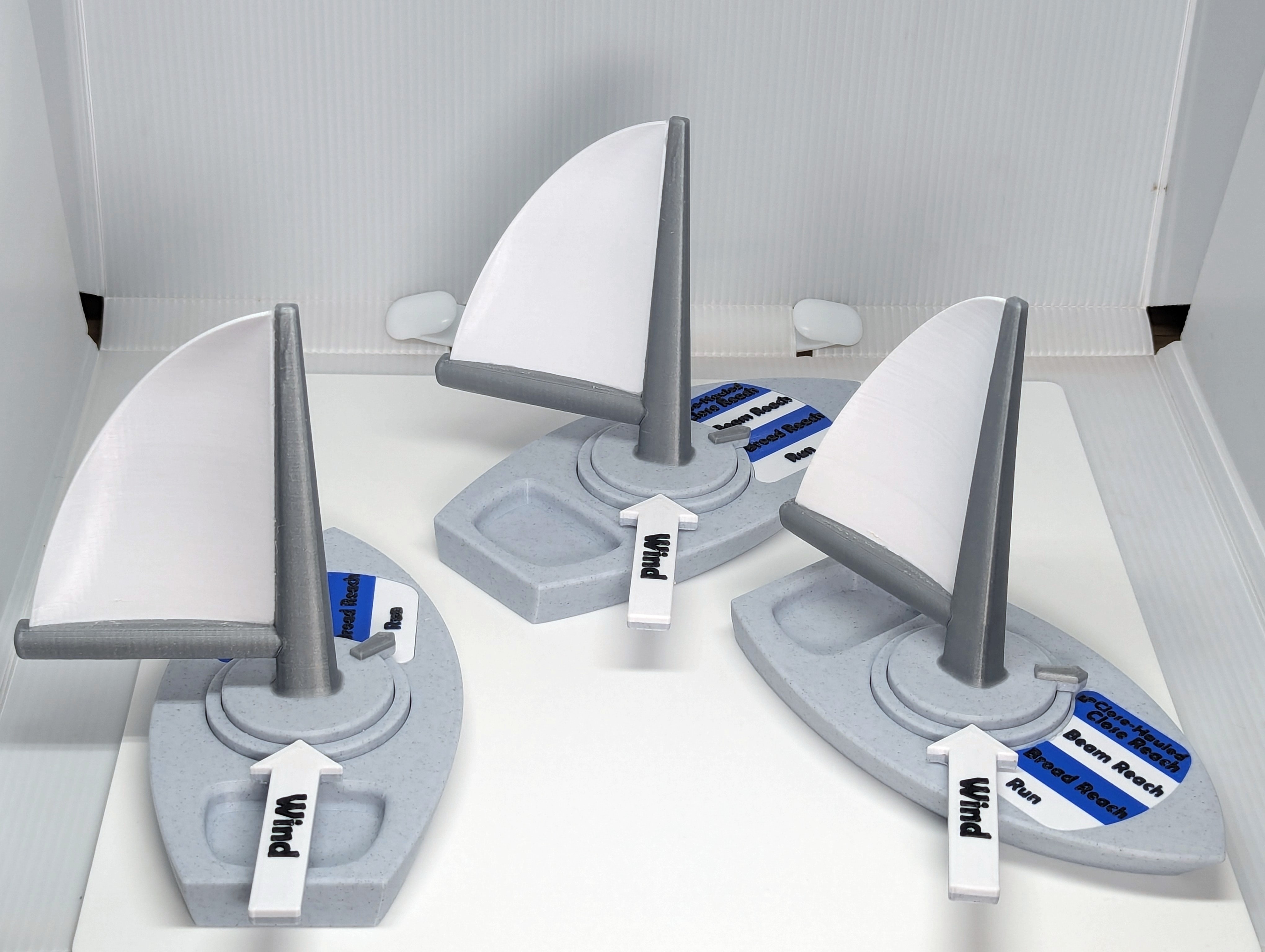
I also brought the model to a few sailing club events. While experienced sailors were interested in it, they only saw it as a novelty. My fellow sailing instructors, on the other hand, were very engaged. They were quick to suggest new functionalities too, especially tacking. Mike, who originally inspired the project, was especially keen on getting some to use for his classes. After enough interest from the other instructors, I left the models I had printed for my class in the classroom for the other instructors to use.
At the end of summer, I checked in with the other instructors to get some feedback on how the models did in class. The main issue was durability. By the end of the summer, only a single model remained intact and in one piece. While I knew the design was a little delicate, real-world users were much harder on the hardware than I expected. Before printing the next batch, I made some structural improvements to the design and also switched to a tougher plastic.
With a year’s worth of feedback integrated, I felt the model was ready for the wider world. In the next section I’ll discuss the publication of the model and its reception online.
Publication
There was one last problem to solve before I could publish, how to find my audience. While I knew my audience was sailing instructors, the problem was that they’re a small group, and an even smaller portion of them have a 3D printer. While I could have pivoted to selling a complete product, I felt the idea would still have a further reach if I kept it free. My solution was simply to make printing the model as low friction as possible. I spent much more time than usual documenting and explaining the project, even making a comprehensive assembly manual.
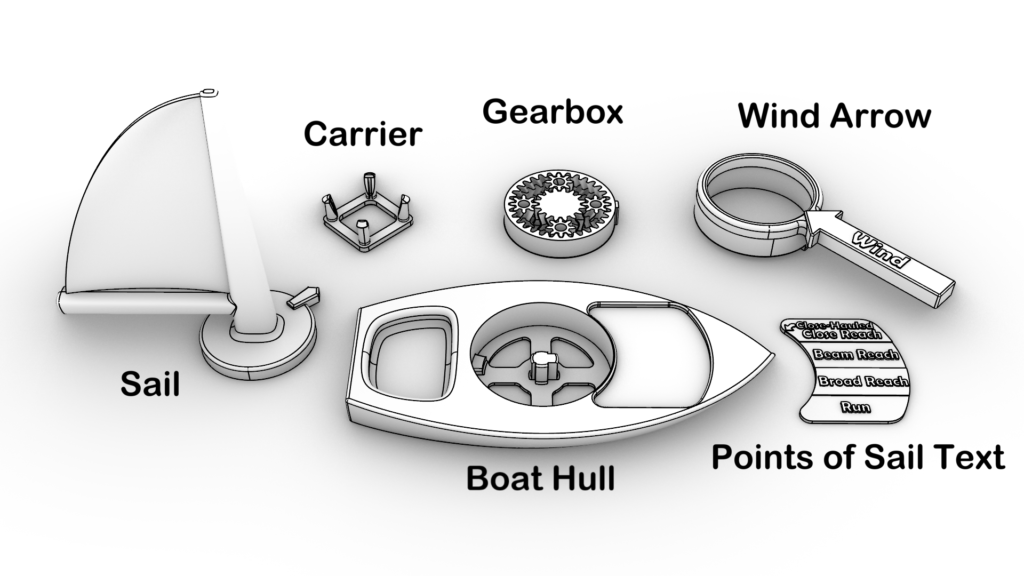
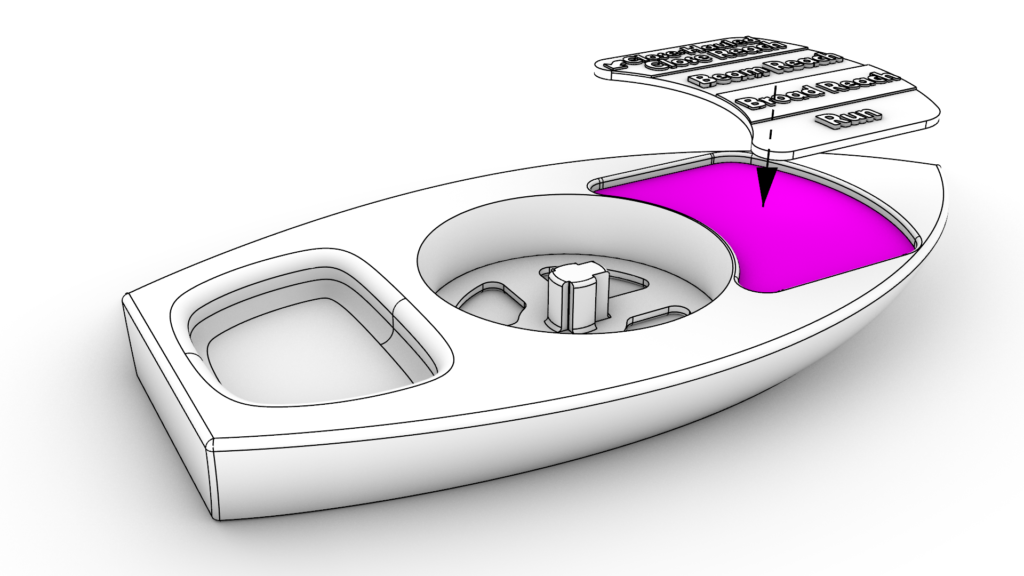
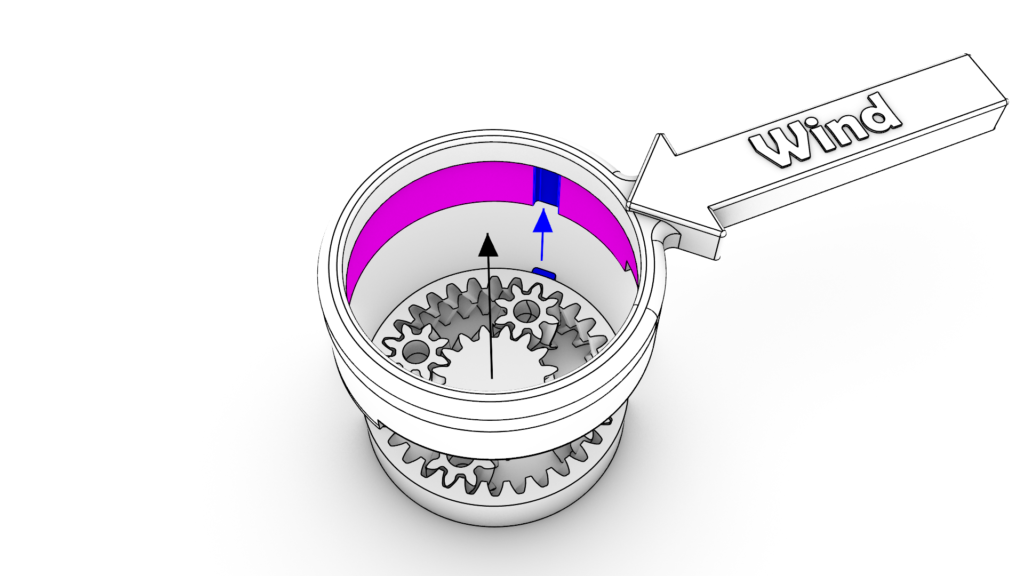
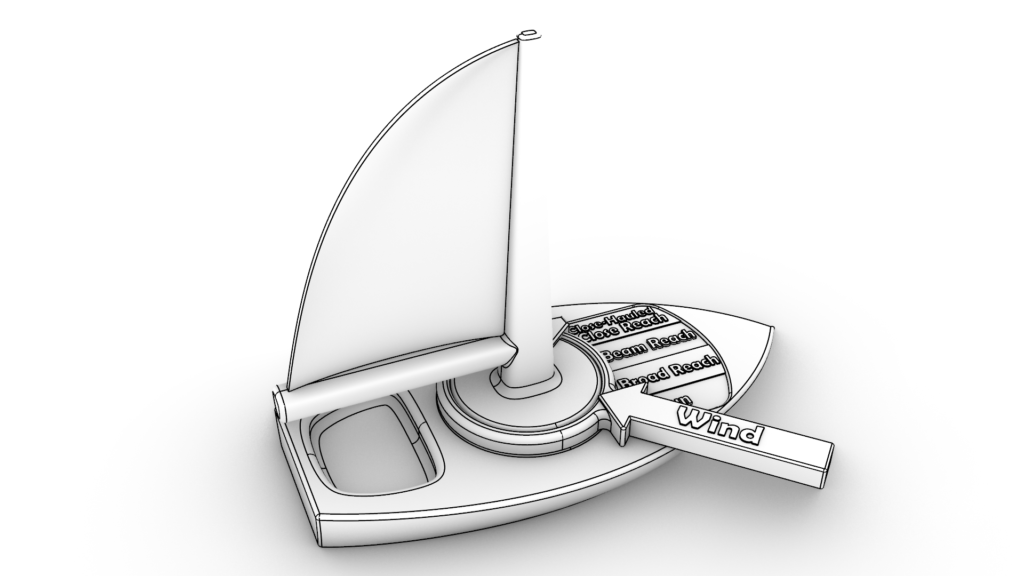
With everything ready, I finally published the files on printables. The model soon found a small but enthusiastic following. As expected, the strongest engagement was coming from sailing instructors. However, there were also a fair number of 3D printing hobbyists who were printing the model for the sailor in their life. This was something I hadn’t anticipated, and I was happy to see that my efforts to streamline the printing were encouraging others to share the design.
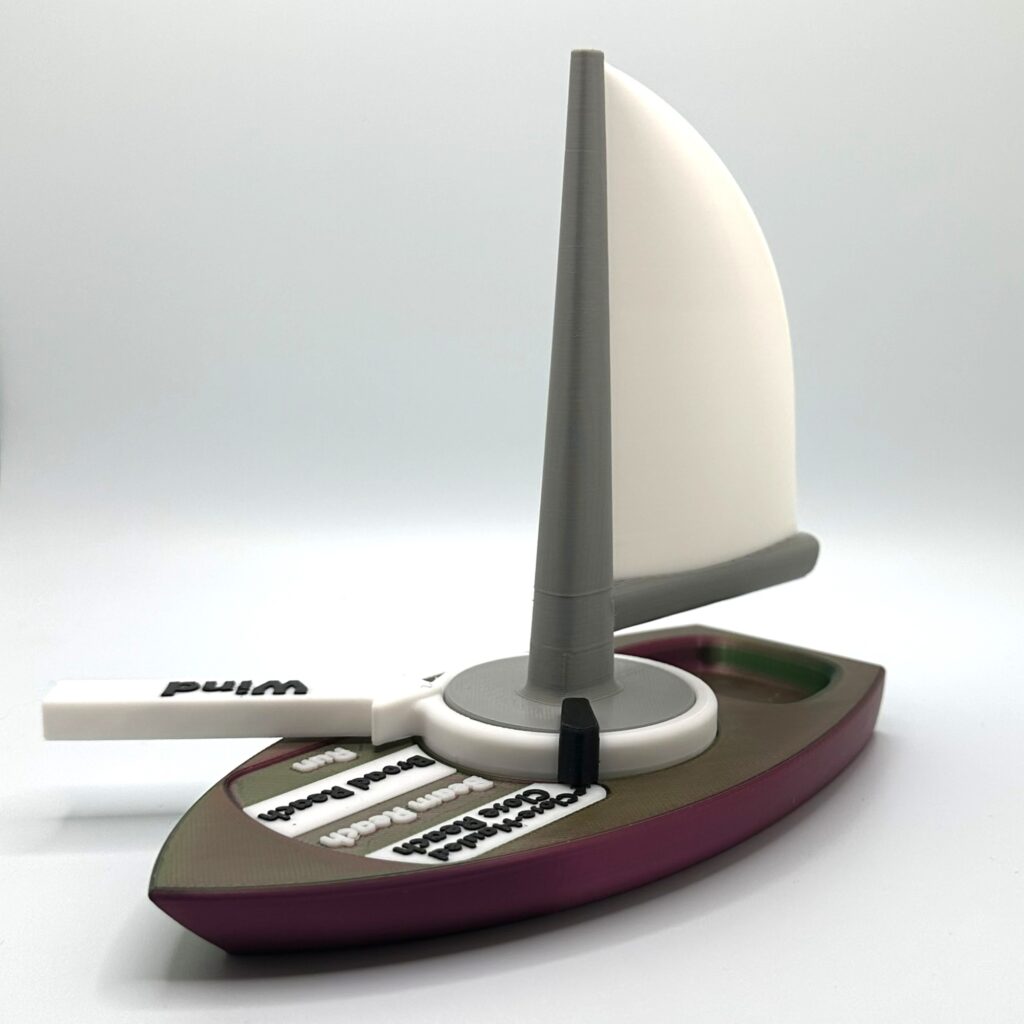
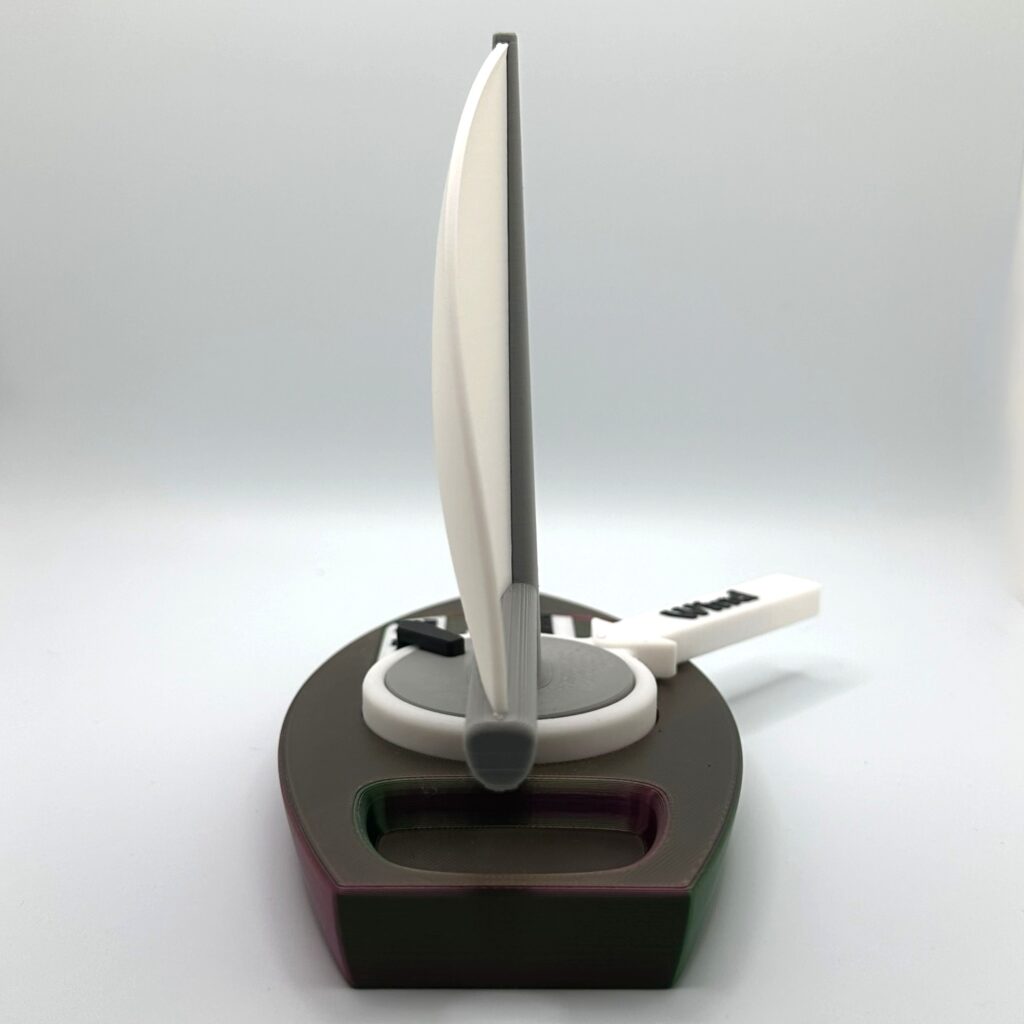
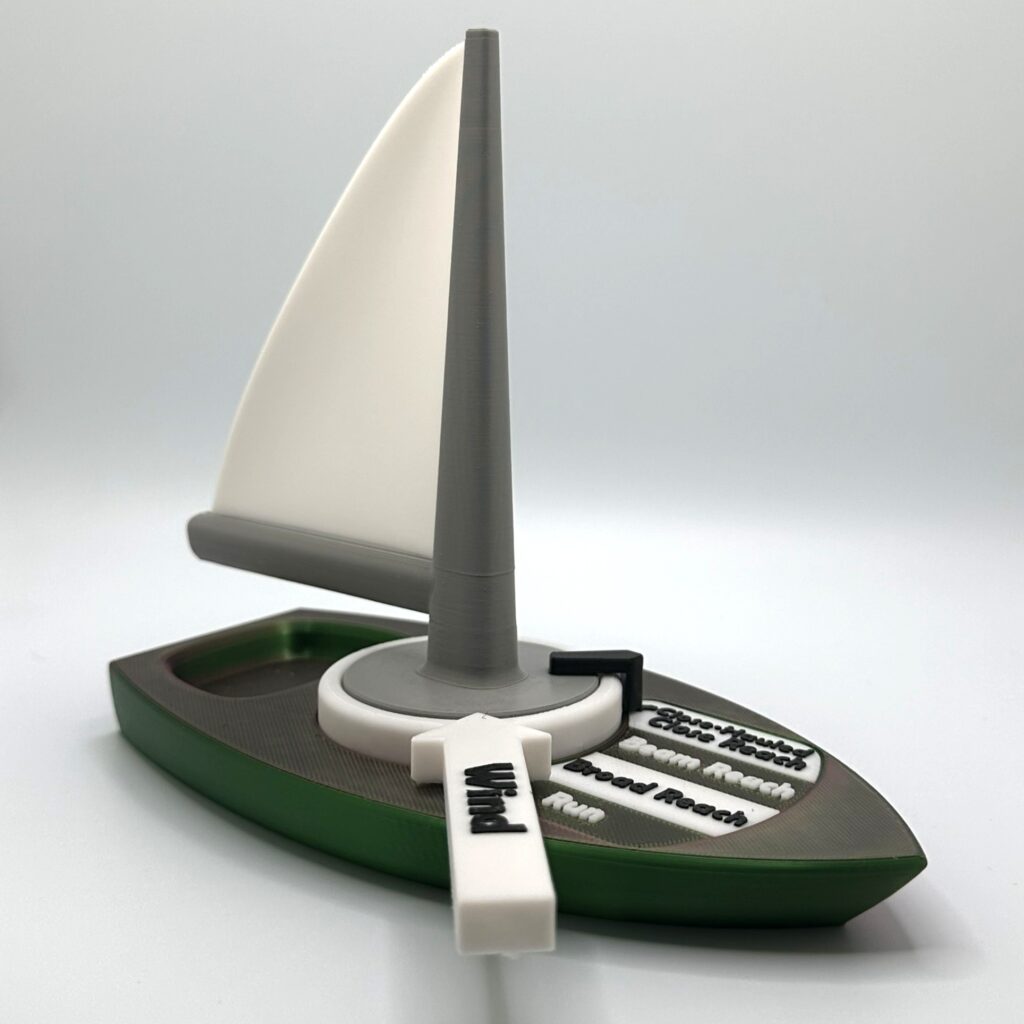
As more people took an interest in the model, I felt energized to iterate on the design. A few users were reporting issues printing some of the parts, so I re-drafted those problem parts until they were easier to print. I also removed the “non-commercial” clause in the license. A user had expressed concern about using the model in the “commercial” context of a sailing class, so I felt the license was becoming an unnecessary barrier. There were also some international users that were looking for help localizing the mode, so I released a blank version for them to add their own language too. Over time, these small adjustments made the model more accessible to all.
Reflection
I have an engineering background, and that defined my initial approach. In engineering, a solution is prescribed by the engineer and then judged against cost and performance. However, as this project went on, I drifted towards something more conversational. By the end, I saw my solutions more like suggestions. Suggestions that I could improve on by integrating the stories and experiences of others.
For a concrete example, look at how I started the project by diving into the technical details of the gearbox. During this technical phase, I decided to removed tacking as a feature. By the time I was collecting feedback on the prototypes, adding tacking back would have required re-doing the entire model. Instead of diving into the technical details, I should have had a conversation. I should have spent more time pitching the concept to my peers and then built up a list of what features mattered.
By the end of the project, integrating feedback from others felt as natural as implementing my own. And the model is better for it. Without the stories and experiences of other, I could never have made the model as accessible as it is now.
Foot notes
- Confusingly, there is some disagreement as to how many Points of Sail there are. Some materials skip Close Hauled, while others add an additional one, the Dead Run. I simply included the 5 that were taught in my first sailing class. ↩︎
- For the unfamiliar, a “tack” is a sailing maneuver. To tack a sailboat, you turn it towards the wind and then keep turning until the sails are filled with wind from the opposite side. ↩︎
- Image credit @SarahKnudsen_2651684. Used with permission. ↩︎